Pascal Lamy: Former WTO Chief Sees EU at China Crossroads
Rebalancing or Protectionism: The former WTO Director-General outlines how Europe could respond to China's trade surpluses.
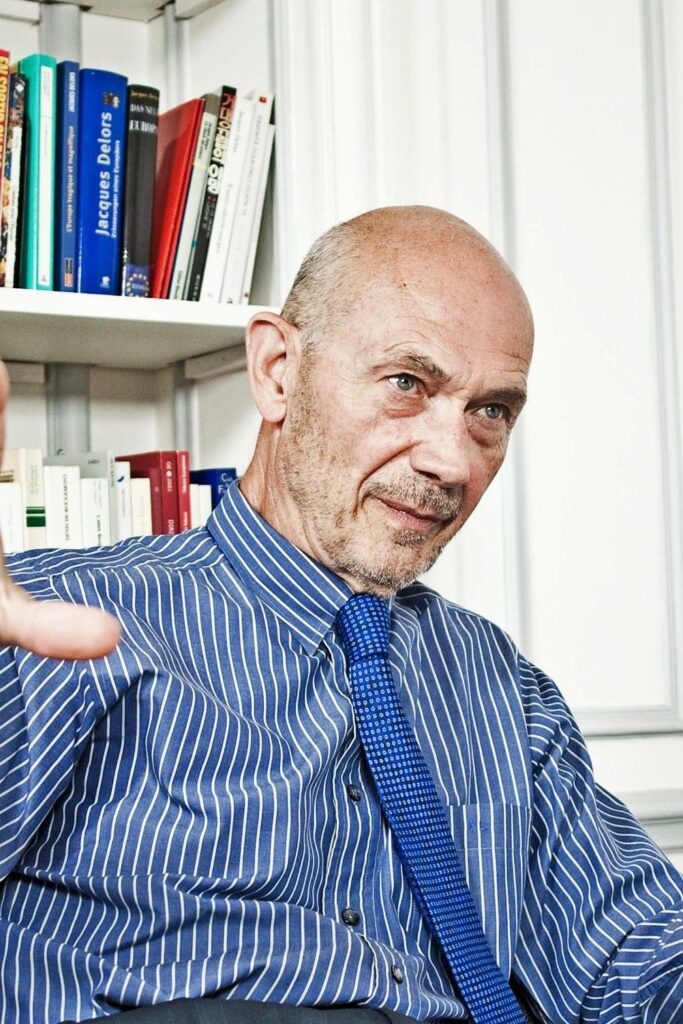
Pascal Lamy, Director-General of the World Trade Organization (WTO) from 2005 to 2013 and previously EU Trade Commissioner from 1999 to 2004, has commented on the trade relationship between the European Union and China in a conversation with the South China Morning Post. His central thesis:
The EU faces a fundamental decision on how to handle the growing trade imbalance with China. Either a rebalancing of economic relations succeeds, or Europe moves in the direction of protectionist measures.
Lamy's career and perspective
Lamy was Chief of Staff to EU Commission President Jacques Delors from 1985 to 1994 and is considered one of the defining figures in building European trade policy.
His career encompasses both national French administration and the multilateral level of the WTO. This dual perspective, European institutional policy on the one hand and global trade rules on the other, shapes his assessment of the current situation.
In the interview, Lamy points to the structural problem that Europe's economic growth is lagging behind that of other world regions. This growth weakness makes the EU more vulnerable to disruptions from asymmetrical trade relationships, he argues.
The trade imbalance in figures
The EU recorded a trade deficit with China of around 291 billion euros in 2023, after this figure reached a high of just under 400 billion euros in 2022.
Particularly in the areas of electric vehicles, photovoltaics and battery technology, Europe's import dependence has increased in recent years. The European Commission has already responded to this, for example with countervailing duties on Chinese electric cars, which range from 7.8 to 35.3 percent depending on the manufacturer, on top of the regular import tariff of 10 percent.
According to the report, Lamy does not advocate for an escalation of these measures, but rather for a structured balance that gives both sides planning security. However, the WTO as a multilateral framework would need to strengthen its mechanisms for this, as bilateral trade conflicts are increasingly being conducted outside the WTO framework.
WTO reform as a core concern
As a former WTO chief, Lamy sees the organization in a difficult phase. The WTO's dispute settlement body has been effectively paralyzed since the end of 2019 by a blockade from the United States, as no new judges for the appellate body have been confirmed. This paralysis makes it difficult for states to resolve trade conflicts through established channels and, according to Lamy, encourages unilateral measures such as tariffs or export controls.
He calls for a reform that both accelerates decision-making and covers new areas such as industrial subsidies and overcapacity in state-controlled economic sectors. This particularly affects sectors such as steel, aluminum and battery technology, in which European manufacturers increasingly face price pressure from Chinese competition.
For Austria as an export-oriented economy with a trade volume with China of around 14 billion euros in 2023, the question of rebalancing or protectionism is not academic.
Austrian supplier companies in the automotive industry, for example in the field of engine and component manufacturing, are affected both by demand from China and by competitive pressure from Chinese manufacturers on European markets. Companies such as voestalpine, which supplies steel and specialty components, monitor developments in EU protective tariffs just as closely as machinery manufacturers who supply much of their exports to Asia. A change in EU trade policy towards Beijing would thus have immediate effects on domestic supply chains and export quotas.
Source: World – South China Morning Post | Original Article