
Silicon Photonics: The Race for the Next AI Infrastructure
While AI clusters consume ever more electricity, light becomes the new bottleneck - and a new opportunity for the chip industry.
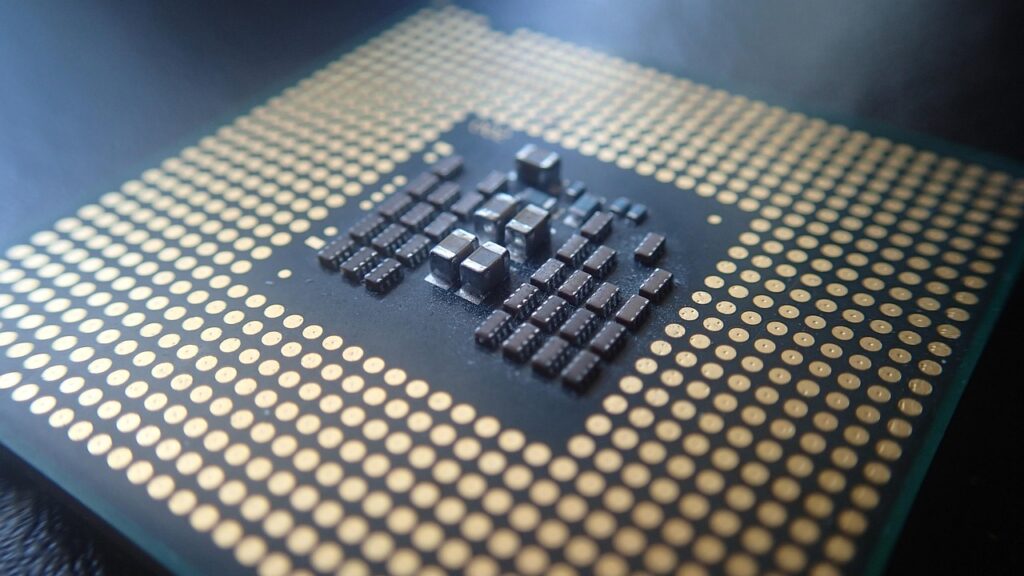
The AI boom is commonly measured in chips: the more powerful the models, the more accelerators, larger data centers, and power consumption are needed.
However, as clusters grow, it becomes clear that raw computing power is only part of the problem. The data volumes between the chips themselves become the limiting factor, and this is precisely where silicon photonics comes in.
Light Instead of Copper
Silicon photonics chips transfer data using light instead of electrical signals over copper wiring. The advantage: higher bandwidth with lower power consumption over both short and long distances within data centers.
Industry analysts see this as a key technology to make connections between thousands of GPUs in AI clusters more efficient, since traditional copper connections are reaching physical limits at today's data rates.
Asian suppliers and contract manufacturers are currently investing in building mass production capacity for photonic chips. The race affects not only the chip designers themselves, but also the entire supply chain, from specialized foundries to manufacturers of optical components such as fiber arrays and waveguides.
From the Lab to the Factory
The technical challenge lies not so much in the principle of silicon photonics, which has been researched for years, but in scaling to industrial manufacturing volumes. Precisely aligning optical fibers on photonic chips in the micrometer range, as shown by the automated manufacturing system in the cover image, must work in the future in large quantities and with stable quality. This exact automation of assembly and testing processes is considered a prerequisite for silicon photonics to transition from niche applications to widespread use in data centers.
Large cloud and AI infrastructure providers from the US and Asia have announced their own photonic interconnect solutions or tested them in pilot projects in recent years. The demand for faster, more energy-efficient data transmission between accelerators is growing in parallel with the global expansion of AI data centers, whose power consumption is expected to increase significantly by 2030 according to the International Energy Agency.
A Market with Many Players
Numerous companies along the supply chain, from chip design firms to foundries in Asia, are currently positioning themselves for the expected surge in demand. Whoever masters mass production of optical components cost-effectively and with high precision could secure an advantage in the next phase of AI infrastructure expansion. Analysts point out parallels to the semiconductor industry overall, where economies of scale and manufacturing precision determine market share.
The expansion of photonic manufacturing capacity has so far been concentrated mainly in Asia, where existing semiconductor supply chains and expertise in optical manufacturing are already present. At the same time, European and US research institutions and companies are also developing their own approaches to photonic interconnects.
For Europe, this development is relevant for several reasons:
European semiconductor equipment manufacturers such as the Dutch company ASML or German equipment maker Trumpf supply components that are also needed for photonic manufacturing processes.
Austrian electronics industry suppliers, for example in the field of precision optics and measurement technology, are indirectly connected to the semiconductor industry through supply chains. Additionally, European data center operators, including providers with facilities in Austria, have an interest in more energy-efficient connection technologies given rising electricity prices and regulatory requirements for data center energy efficiency within the EU.
Source: TechNode | Original Article