PASCO Forum in Vienna: How Digital Intelligence and Green Materials Come Together
55 years of diplomatic relations between China and Austria provide the framework for a meeting of researchers, entrepreneurs and universities.
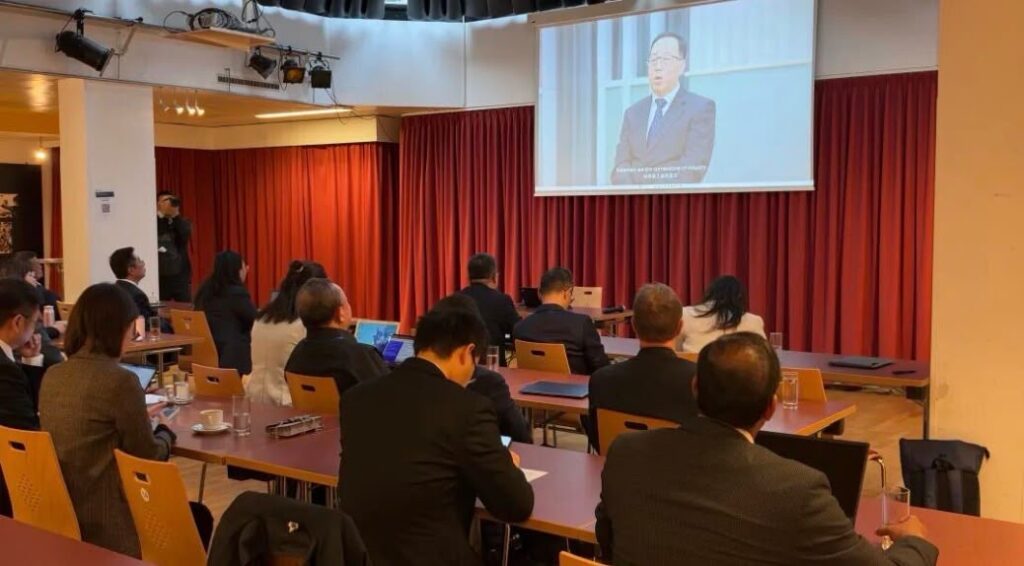
At the end of October 2026, the International Forum on Digital Intelligence Integration and Sustainable Materials Development took place at the SkyDome Conference Center in Vienna.
The organizer was the Professional Association of Chinese Scientists and Technologists in Austria (PASCO), and the participants came from universities, research institutions and companies from China, Austria and other European countries.
Artificial Intelligence Meets Materials Research
The focus was on questions such as how artificial intelligence can accelerate the development of new materials and how manufacturing processes can be digitally optimized.
Dr. Hans-Peter Gänser from the Materials Center Leoben presented applications of machine learning in advanced materials. Professor Christof Sommitsch from the Graz University of Technology discussed modeling and process optimization in materials processing.
Professor Wei Chen from Wuhan University of Technology presented the development and application of low-carbon cements in China. Professor Priyadharshini Perumal from Montanuniversität Leoben dealt with industrial by-products from industry and mining as well as alternative binders for sustainable construction.
From Research to Industrial Application
Further lectures covered functional ceramics, metallurgical process simulation, battery recycling and industrial drive technology. Professor Arish Dasan explained how waste materials can be processed into functional ceramics using binder jetting. Dr. Lukas Wiszniewski, CEO and co‑founder of RePyro GmbH, presented a concept for a closed battery loop.
In the field of material testing, Professor Wolfgang Drexler from the Medical University of Vienna reported on optical coherence tomography for medical imaging. Peter Ruchti, Managing Director of ZwickRoell Fürstenfeld, spoke about material testing under extreme conditions. Thomas Walter, co‑founder and CEO of ReLab Research GmbH, presented accelerated fatigue testing for electronic components.
Partnerships and Educational Exchange
Cybersecurity, artificial intelligence and international educational cooperation were also on the agenda. Dr. Cornelius Granig, founder of YANUS, explored pathways for academic collaboration in cybersecurity and trust.
Dr. Caichun Gong, Secretary General of the Organising Committee of the China‑Europe Scientists Forum, spoke about China‑Europe technology collaborations.
The International Center for Education and Innovation (ICEI), founded in June 2026 in Vienna, connects universities, research institutions and companies. Together with Wuhan University of Science and Technology it organized a summer school program with company visits, university exchanges and cultural learning. The event involved Hunan University of Science and Technology as well as the State Key Laboratory of Advanced Refractories.
For the European business location, the relevance lies especially in topics such as circular economy, battery recycling and low‑carbon construction. Austrian research institutions like Montanuniversität Leoben and TU Graz are directly involved, as are industrial companies from the testing and recycling sector.