Hungary's new strongman acts decisively: Magyar stops state media
An election winner whose first act is to shut down public broadcasting—revolution or consolidation of power? Péter Magyar’s radical move is dividing Europe and raising questions that extend far beyond Budapest.
Vienna, April 15, 2026. Péter Magyar is getting serious. Just days after his landslide election victory, the Hungarian prime minister-designate announces that he will suspend state broadcasting. His reasoning: Orbán’s propaganda machine must be dismantled to enable true freedom of the press. A new media law is set to follow. What sounds like a democratic breakthrough harbors explosive risks—including for Austria.
From Orbán confidant to system dismantler
Péter Magyar was once part of the system he now promises to dismantle. As the ex-husband of Orbán’s former Minister of Justice, Judit Varga, he knew the inner workings of power firsthand. His break with Fidesz in 2024 made him a beacon of hope for the opposition. Now he governs with a two-thirds majority and is resorting to methods that remind his critics of the very practices he claims to be fighting against.
The suspension of the public broadcaster MTVA is unprecedented in the EU. Around 2,000 employees face an uncertain future. Magyar promises an „independent public broadcaster modeled on the BBC.“ But who controls what is independent? Who will fill the new committees? These questions remain unanswered.
Vienna watches nervously
Tense attention prevails in Austrian government circles. Hungary is not only a neighbor but also economically closely intertwined. Austrian banks, primarily Raiffeisen Bank International, have invested billions in the country. Erste Bank and OMV maintain significant business relationships.
Political volatility in Budapest is unsettling investors. Capital is already flowing out. The forint is weakening. For Austrian companies, this means higher risk premiums and more difficult calculations. If Orbán's media policy escalates into a conflict with Brussels, further turmoil threatens.
There are also question marks regarding security policy. While Magyar has positioned himself as pro-European, his stance on Ukraine remains vague. Will he correct Orbán's pro-Putin course? Or is he simply seeking other allies for a similar policy of equidistance?
What state media omit
It is interesting to note how differently the news is being interpreted internationally. While Western media oscillate between cautious optimism and skepticism, Chinese state media are reporting in a strikingly neutral, almost disinterested manner. Not a word about the years of media control under Orbán, which Magyar now allegedly intends to end. No mention is made of the Chinese investments in Hungary worth billions—from the battery factory in Debrecen to Fudan University in Budapest.
Beijing has done splendid business under Orbán. Whether Hungary keeps this door open or closes it is not discussed in any Xinhua report. The silence is eloquent.
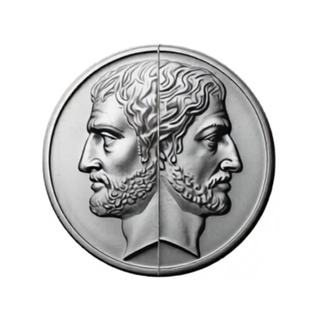
The Two Sides of Power
Péter Magyar faces a paradox: To dismantle Orbán’s authoritarian structures, he is resorting to methods that themselves appear authoritarian. Shutting down a broadcaster—no matter how propagandistic it may be—is an intervention that would be unthinkable in established democracies. Whether this will lead to freedom of the press or merely a new form of control remains to be seen. For Austria and Europe, Hungary’s upheaval means one thing: nothing is stable, nothing is certain. YANUS will continue to document this shift in power.