
ECARX Invests $266 Million in a Chinese Automotive Operating System
The Nasdaq-listed technology company is acquiring the Flyme software division in its entirety. The deal raises questions about its valuation and highlights how aggressively Chinese companies are competing for dominance in the connected-vehicle market.
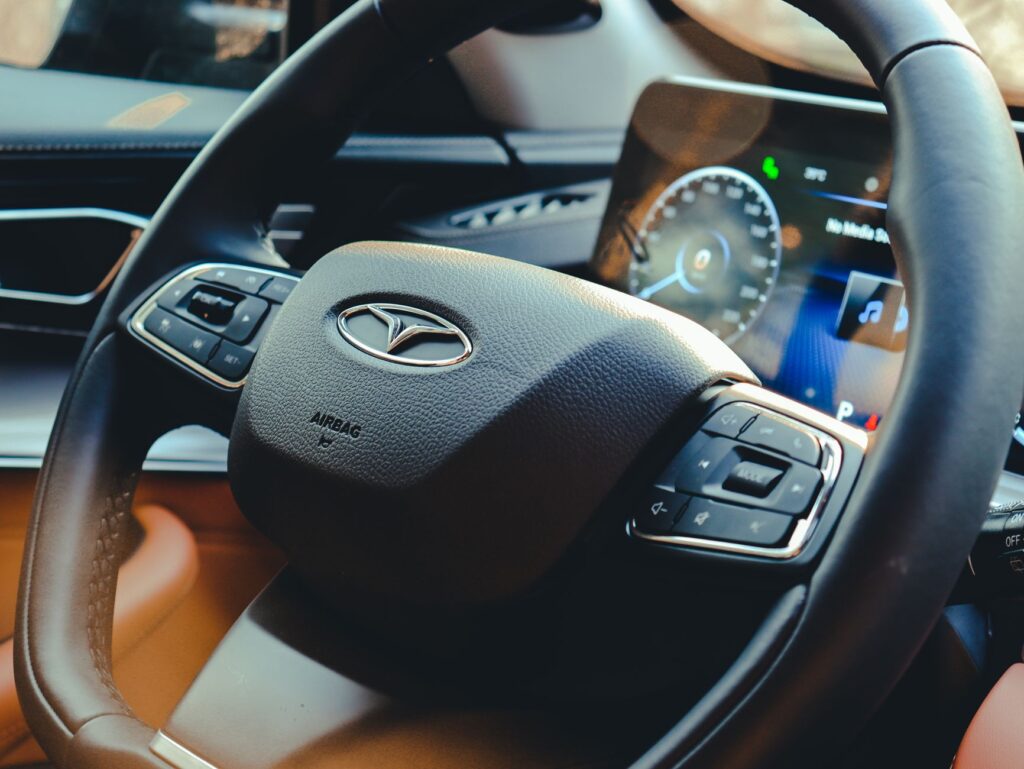
Chinese automotive supplier ECARX has announced the full acquisition of Xingji Meizu’s Flyme software business for 1.8 billion yuan (266 million U.S. dollars). The transaction includes the Flyme Auto smart cockpit operating system, the cross-device Flyme OS, and all associated patents, research capabilities, and development teams.
Complex corporate structure behind the deal
The acquisition is being carried out through Hubei Qiguang Technology, a company specifically spun off from Xingji Meizu. Xingji Meizu itself was formed in 2022 when the Chinese smartphone manufacturer Meizu was acquired by electric vehicle maker Geely, the same group that also owns ECARX. Geely founder Li Shufu holds stakes in both companies through various investment structures. In effect, the Geely group is thus consolidating its software activities for connected vehicles under one roof. ECARX, founded in 2017 and listed on the Nasdaq since 2022, already supplies automakers such as Volvo, Polestar, and Lotus—all part of the Geely empire.
High price, uncertain return
At $266 million, ECARX is paying a hefty price for a technology that has yet to prove itself in the highly competitive market for vehicle operating systems. Flyme Auto competes with established players such as Huawei’s HarmonyOS—which is already running in vehicles from AITO and other manufacturers—as well as Baidu Apollo and the proprietary systems from BYD and Xiaomi. According to analysts at CIC, the Chinese market for smart cockpit systems is expected to grow to over 80 billion yuan by 2027—a pie that dozens of providers are vying for. Whether ECARX is gaining a technological edge with the Flyme acquisition or overpaying for an overvalued software platform will be determined by the licensing agreements in the coming years.
The Geopolitical Dimension of the Race for the Car
This consolidation demonstrates how determined Chinese corporations are to control the value chain from chips to the user interface. ECARX develops not only software but also hardware; its in-house Antora chips are based on ARM architecture and are manufactured by TSMC. This vertical integration is reminiscent of strategies that European automakers are also pursuing, but have so far only implemented to a limited extent.
What does that mean for Austria?
Competitive pressure is intensifying for the domestic automotive supply industry, from AVL List in Graz to the numerous electronics specialists in central Upper Austria. When Chinese corporations offer software, hardware, and vehicle integration all under one roof, the scope for European suppliers in cockpit electronics and infotainment systems shrinks. At the same time, new opportunities are emerging: Austrian companies that are leaders in sensor technology, battery management, or specialized semiconductor solutions could become attractive partners for Chinese platforms.
In any case, the acquisition makes it clear that decisions regarding the digital architecture of future vehicles are increasingly being made in Hangzhou and Shenzhen, not in Wolfsburg or Stuttgart. ECARX already supplies its technology to over five million vehicles worldwide each year.
Source: TechNode | Original Article