
Economic Growth with China: Graz Becomes a Hub for Chinese Electric Cars
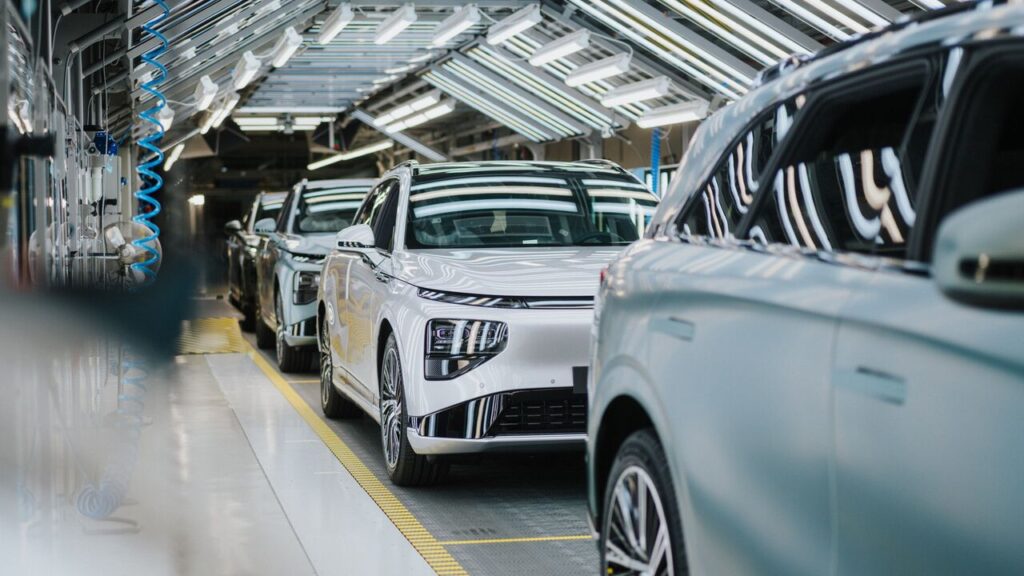
While Europe’s automotive industry faces growing competitive pressure from Chinese manufacturers, Graz is gaining increasing geopolitical significance. The Chinese electric-vehicle manufacturer Xpeng plans to further expand its partnership with Magna Steyr and, in the future, have a fourth vehicle model assembled in Austria.
As a result, Graz is becoming a key component of the European strategy of one of China's most ambitious electric-vehicle companies.
The decision is far more than just a routine expansion of production. It is part of a comprehensive response to the European Union's tougher trade policies and demonstrates how Chinese manufacturers are reorganizing their presence in Europe.
Magna Steyr Becomes a European Anchor
Magna Steyr has been producing Xpeng SUV models since September 2025 G6 and G9 for the European market. The electric sedan was launched in early 2026 P7+ In addition, Xpeng founder and CEO He Xiaopeng has now confirmed that another model will be manufactured in Graz.
Magna Steyr has now become Xpeng’s most important European manufacturing partner. For the Chinese manufacturer, the Graz plant offers exactly the flexibility needed to rapidly expand European production capacity. Different vehicle types and powertrain systems can be produced on the same assembly lines, a decisive advantage over building its own plants.
EU Tariffs Are Changing the Rules of the Game
The expansion of production is taking place amid a period of profound changes in the European automotive market.
Since late October 2024, the European Union has been imposing additional countervailing duties on battery-electric vehicles from China. This follows investigations by the European Commission into government subsidies provided to Chinese manufacturers. For many manufacturers, the new regulations mean significant additional costs when exporting to the European Union.
For companies like Xpeng, local manufacturing is therefore becoming significantly more important.
Manufacturing within Europe makes it possible to:
lower customs risks,
shorter supply chains,
faster deliveries,
greater local value creation,
as well as a stronger market position with European customers.
At the same time, Brussels is already working on alternative trade mechanisms, such as minimum import prices or investment agreements. This, too, increases the incentive for Chinese manufacturers to expand their industrial presence within Europe.
Graz Is Becoming a Bridgehead for Chinese Auto Production
For Magna Steyr, this partnership opens up significant business opportunities. The company has decades of experience as a contract manufacturer for international automakers and produces vehicles from a wide variety of brands under one roof.
With Xpeng, this role takes on even greater strategic importance.
While many European manufacturers are having to reduce or realign their production capacity, Graz could become one of the most important locations for Chinese electric vehicles within the European Union.
This is also changing Austria's role within the European automotive industry. The country is increasingly serving as a bridge between Chinese vehicle development and European markets.
.
More than just a production order
The decision to choose Graz is a prime example of a fundamental shift in the European automotive industry.
Chinese manufacturers have long since stopped exporting vehicles exclusively to Europe. They are beginning to establish production networks within the European Union, thereby securing a lasting foothold in the European market.
For Austria, this means additional investment and jobs. At the same time, however, Europe’s strategic dependence on Chinese automakers is also growing, particularly in a market that is increasingly shaped by electric mobility, battery technology, and digital vehicle software.
The expansion of Xpeng production at Magna Steyr is therefore much more than just another manufacturing contract. It marks another step in the global competition for Europe’s industrial future and makes Graz one of the most important hubs of this development.
Graz Cargo Terminal: Key Local Infrastructure
The Cargo Terminal Graz (formerly Cargo Center Graz) is the central logistics hub in Styria, serving as the essential backbone of Magna Steyr’s just-in-time and just-in-sequence supply chain.
Thanks to close cooperation between the State of Styria and the private sector, the infrastructure necessary for this major project—the final assembly of Chinese cars—is in place here.
Source: Industry Magazine
https://industriemagazin.at/automobil/xpeng-europa-produktion-magna-steyr-graz/
Additional information:
https://cargoterminalgraz.com/unternehmen/
https://www.gwp.eu.com/