
BYD presents China's first 4nm chip for autonomous driving
The Chinese automaker is developing its own high-performance semiconductors and striving for independence from Western technology. Competitive pressure is intensifying for European car manufacturers.
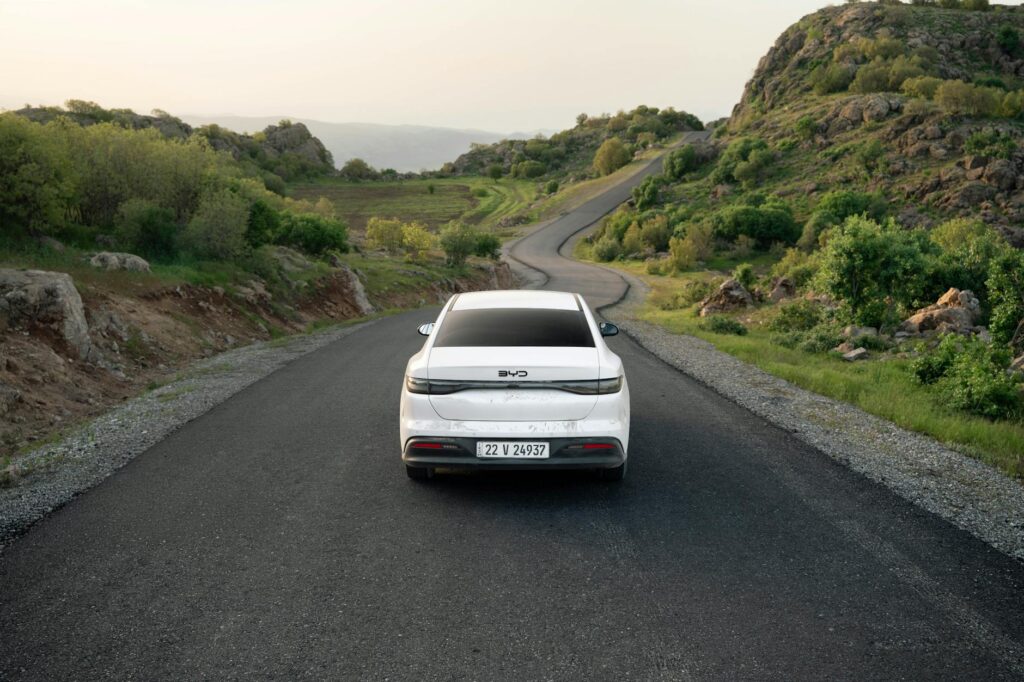
Chinese electric vehicle giant BYD has unveiled the Xuanji A3, which it claims is the first 4-nanometer chip developed in China for autonomous driving. Company founder Wang Chuanfu revealed the semiconductor at an event on Thursday. The chip supports L3 and L4 autonomous driving and is already in mass production.
Technical Specifications and Strategic Importance
The Xuanji A3 marks a technological milestone for BYD. In a three-chip configuration, the system delivers a combined computing power of over 500 TOPS (Tera Operations Per Second). The 4nm manufacturing process is among the most advanced production processes worldwide and has primarily been dominated by Taiwanese and South Korean manufacturers until now. With this, BYD demonstrates not only expertise in vehicle manufacturing but also in semiconductor development. The company follows a vertical integration strategy: from battery design and vehicle production to chip development, the group increasingly controls the entire value chain.
China's response to Western export controls
The timing of the presentation is no coincidence. Since 2022, the US has tightened its export restrictions on advanced semiconductors to China. Nvidia and other Western chip manufacturers are no longer allowed to sell their most powerful AI processors to Chinese companies. The Xuanji A3 shows that Chinese corporations are developing their own solutions. Whether the chip's manufacturing actually takes place entirely in China or utilizes TSMC's capacity in Taiwan remained unclear during the presentation. This question has significant geopolitical relevance.
What does this mean for Austria and Europe?
Competition is intensifying for the European automotive industry. BYD is already the world's largest manufacturer of electric vehicles and is aggressively expanding into Europe. A BYD factory is currently being built in Hungary, scheduled to produce vehicles for the European market starting in 2025. Austrian suppliers like AVL List and Miba are facing the question of whether Chinese automakers will act as customers or competitors in the future. BYD's technological independence in chips could weaken the negotiating position of European technology providers. At the same time, opportunities are opening up: Austrian companies with expertise in sensor technology, precision manufacturing, or specialty materials could benefit from the growing Chinese semiconductor industry.
The Two Sides of Power
BYD's chip development deserves recognition as a technical achievement. A company that started as a battery manufacturer 30 years ago is now producing world-class semiconductors. At the same time, the development raises questions: How dependent will Europe become on Chinese automotive technology? The EU Commission is already considering punitive tariffs on Chinese electric cars due to alleged subsidies. Whether such measures can slow down the technological lead remains questionable. For consumers, increased competition could mean lower prices. For European jobs in the automotive industry, the calculation looks different.
Source: TechNode | Original Article