JD.com and Tencent Join Forces in AI for Smart E-commerce
China's tech giants are combining artificial intelligence with online commerce. The new cooperation could revolutionize shopping via voice command.

Vienna, June 8, 2026 – Two of China's most powerful technology corporations are joining forces in the field of artificial intelligence: E-commerce giant JD.com and social media titan Tencent will work together on AI agents. These digital assistants are set to fundamentally change online shopping.
From chat to order in seconds
The cooperation combines JD.com's strengths in logistics and retail with Tencent's enormous reach. The messaging service WeChat has over a billion active users. Through the integration of AI agents, consumers could in the future shop directly via voice command or chat, without opening a separate shopping app. JD.com's AI agent is already reportedly linked to smartphones from leading Chinese manufacturers like Huawei, Oppo, and Honor. The so-called agent-to-agent technology allows different AI systems to communicate with each other and automatically handle complex tasks such as product search, price comparison, and ordering.
Race for AI Supremacy in Trade
The alliance is a direct response to the intensified competition in China's tech sector. Alibaba, ByteDance, and Baidu are also investing heavily in AI-powered commerce solutions. For JD.com, which recorded annual revenues of approximately 150 billion euros in 2023, it's about the future viability of its business model. Tencent, in turn, is strengthening its ecosystem against the aggressive expansion of competitor ByteDance, whose platform Douyin is increasingly taking market share from traditional e-commerce players. The partnership shows how Chinese corporations are pooling their respective strengths to gain ground in the global AI race.
What does this mean for European companies?
This development presents both opportunities and challenges for European exporters and traders. AI-powered commerce could simplify access to the Chinese market, as language barriers are eliminated through automatic translation. Austrian products could theoretically reach new customer segments via intelligent recommendation systems. At the same time, dependencies on Chinese platforms and their algorithms are emerging. The question of which products are even shown to consumers will be decided by AI systems in the future based on non-transparent criteria.
The Two Sides of Power
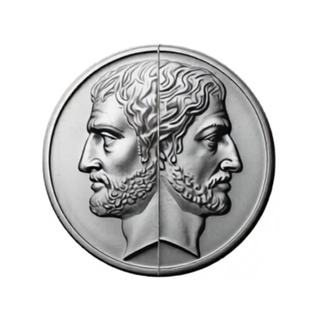
The cooperation demonstrates China's technological dynamism in the AI sector, despite Western sanctions on semiconductors. Innovations are emerging, efficiency is increasing, and new business models are becoming possible. However, the concentration of market power, user data, and AI expertise in a few hands raises questions.
When algorithms determine what hundreds of millions of people buy, economic power shifts on an unprecedented scale. European regulators are watching these developments with growing attention. Whether the EU's AI Act will be sufficient to ensure fair competitive conditions for domestic providers remains open.
Source: TechNode | Original Article