
Gulf Stream on the verge of collapse: What politicians and corporations are keeping silent about
Scientists warn that the Atlantic Ocean current could reverse course before the end of this century. While Brussels plays down the threat, corporations have long been preparing for the unthinkable.
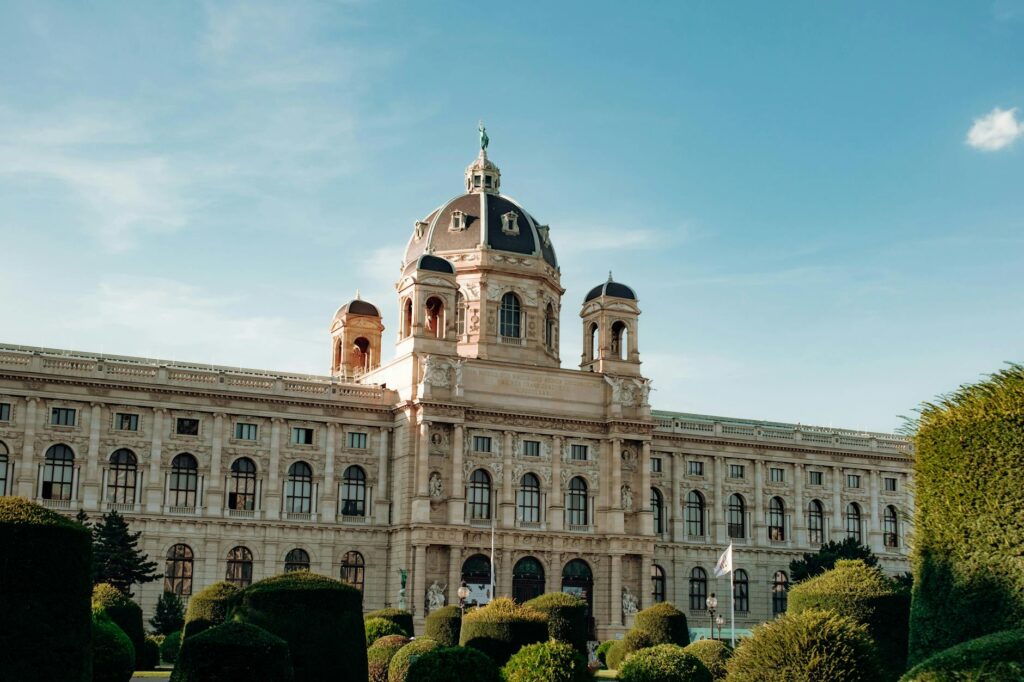
Vienna, April 17, 2026. The Atlantic Meridional Overturning Circulation, that gigantic conveyor belt of the oceans that has supplied Europe with mild warmth for millennia, stands on the brink of collapse. New studies show: the tipping point could be reached within the coming decades. Yet while science sounds the alarm, politics and business engage in strategic silence, or quietly position themselves for a future they do not dare speak of publicly.
Europe's heating is being turned off
The Gulf Stream and its North Atlantic offshoots transport enormous quantities of heat from the tropics to Europe. Without this system, winters in Vienna, Berlin and London would resemble those in Canada, with minus 20 degrees being no rarity. At the same time, paradoxically, more extreme heat waves threaten in summer, as the stabilizing ocean currents disappear.
The facts are alarming: the current has already slowed by 15 percent since the 1950s. Meltwater from Greenland is diluting the North Atlantic's saltwater and disrupting the mechanism that powers the system. Climate scientists are no longer talking about „if,“ but „when.“.
Who benefits from silence?
What is remarkable is what is not happening: no government in Europe has presented a serious emergency plan for a scenario that would affect millions of people. The EU Commission points to long-term climate goals, while energy companies quietly restructure their portfolios. RWE, Vattenfall and OMV are investing massively in technologies that become profitable in conditions of extreme temperature fluctuations, from storage solutions to climate-resilient infrastructure.
For Austria, this has concrete consequences: the Alpine republic would have to restructure its entire agriculture, heating costs would explode, tourism would face the end as it currently exists. Yet in the Finance Ministry, no one calculates these scenarios through, at least not publicly.
Science is being silenced
Climate researchers report behind closed doors of pressure to present their findings in a „balanced“ manner. The fear of panic is instrumentalized to water down inconvenient truths. Yet panic, or rather: determined action, would be warranted.
The Central Institute for Meteorology and Geodynamics (ZAMG) in Austria confirms the international findings, but is hardly heard by politicians. Instead, reassurances dominate: they will „monitor the development.“ A phrase that in political communication usually means: we are doing nothing.
The Two Sides of Power
On one side stands a science increasingly desperate in warning of a catastrophe it sees coming. On the other, a political-economic elite that either closes its eyes or has long since secured itself at the expense of the general public. Corporations buy land in climatically stable regions, the wealthy build their bunkers, while the average Austrian does not even learn what awaits him.
The tipping of the Gulf Stream would be no abstract environmental problem, but a civilizational rupture for Europe. The question is not whether we should talk about it, but why we have avoided it for so long. YANUS will continue to ask this question.