
The Yuriy Kosyuk File: How a Ukrainian Oligarch Is Conquering Europe's Poultry Market with His MHP Group (Part 1)
European agricultural policy is intended to protect domestic producers while ensuring high standards for animal welfare, food safety, and fair competition.
According to media reports, the case of the Ukrainian poultry company MHP (Myronivsky Hliboproduct) illustrates how international corporations can exploit regulatory loopholes—while European financial institutions supported their expansion with loans worth billions.
Several years ago, the Austrian daily newspapers „KURIER“ and „HEUTE“ reported on a scheme through which the MHP Group exported large quantities of chicken meat to the European Union, even though strict import quotas were actually in place for particularly valuable cuts.
The majority owner of MHP is the Ukrainian oligarch Yuri Kosyuk (German spelling: Jurij Kossjuk), one of the country's wealthiest entrepreneurs.

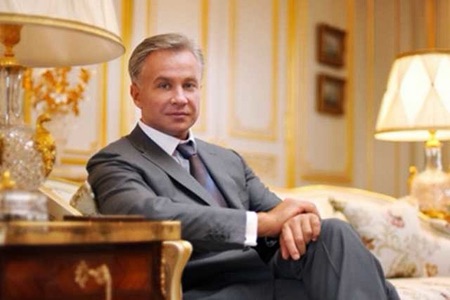
Yuri Koyuk (Photo: superyachtfans.com)
Kosyuk had close ties to the former Ukrainian government and served at times as an advisor to President Petro Poroshenko.
His corporate holding company was registered in Cyprus for years, after previously having been based in Luxembourg.
The „Bone Trick“
At the heart of the criticism was a relatively simple mechanism:
Quantitative restrictions applied to standard chicken breast fillets under the EU Association Agreement with Ukraine. However, MHP exported chicken breasts that still had a small wing bone attached. As a result, they were classified differently for customs purposes and were not subject to the same import quotas.
After being imported into EU member states such as the Netherlands or Slovakia, the remaining bone was removed. The meat could then be freely marketed within the European Union as a processed product or even exported to third countries.
Critics described this approach as a deliberate circumvention of the intent of European import regulations.
Massive Expansion with Loans from the EIB and EBRD
Not only was the business model itself particularly controversial, but so was its financing.
Over the years, MHP received substantial loans from international financial institutions, including
European Investment Bank (EIB), European Bank for Reconstruction and Development (EBRD).
This financing was used to expand new production capacity and support international expansion.
Critics asked why European taxpayer money should be used to support a corporation that would then compete directly with European poultry producers.
Acquisitions in Slovenia, Greece, and Spain
The Ukrainian food company, which has approximately 40,000 employees, is continuing to expand its presence in Europe.
In 2019, Kosiuk acquired the Slovenian poultry producer Perutnina Ptuj. Through this company, a 92% stake was acquired in the Spanish Uvesa Group acquired.
In June 2026, MHP announced that it would gradually acquire a majority stake in the Greek poultry company Nitsyakos will take over. The two companies signed an investment agreement in July 2026 that provides for a phased acquisition of an initial 70 percent stake. In the future, MHP may increase its stake to up to 100 percent.
A Case of Current Relevance
Since Russia's invasion of Ukraine, the political landscape has changed fundamentally.
The European Union temporarily granted extensive trade concessions to Ukrainian agricultural products in order to stabilize the Ukrainian economy.
At the same time, however, protests by European farmers intensified. In several member states, there was criticism that imports from Ukraine were significantly increasing the downward pressure on prices for domestic producers.
To this day, the MHP case therefore serves as a prime example of the difficult balance between providing economic support to Ukraine, ensuring fair competition within the EU, protecting European agriculture, and determining the conditions under which European financial institutions should provide support to large private corporations.
Unanswered Questions
Even years later, key questions remain:
Should European development banks finance corporations that subsequently compete directly with European producers?
How effective are trade agreements if regulatory loopholes undermine their original purpose?
Are the control mechanisms sufficient to ensure compliance with European animal welfare and quality standards for imports?
And how can economic solidarity with Ukraine and the protection of European agriculture be reconciled in the long term?
The MHP case shows that these issues extend far beyond a single poultry company. They touch on the fundamental question of how Europe intends to shape its agricultural, trade, and subsidy policies in the future.