
40 Years of Chernobyl: The War Makes the Exclusion Zone a Time Bomb
On April 26, 1986, Reactor 4 at Chernobyl exploded and changed the world. Four decades later, Russia’s war is turning the radioactive exclusion zone into a mine-ridden no-man’s-land, with incalculable consequences for all of Europe.
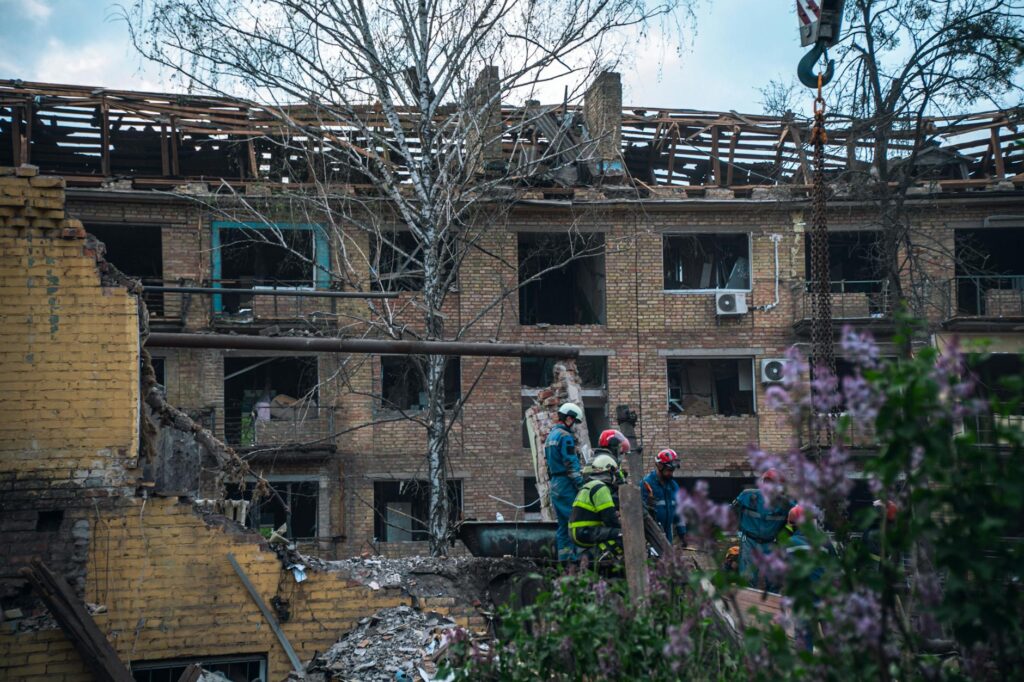
Vienna, April 25, 2026. Forty years after the worst nuclear disaster in history, Chernobyl has once again become a source of danger. What began in 1986 as a technical failure has now, due to war, landmines, and uncontrolled wildfires, become a new threat to the entire continent. The exclusion zone on the Ukrainian-Belarusian border is no longer merely a memorial to the past; it is an active risk in the present.
The night that irradiated Europe
On April 26, 1986, at 1:23 a.m. local time, a safety test in Reactor Unit 4 of the Chernobyl Nuclear Power Plant spiraled out of control. The explosion hurled radioactive material kilometers into the atmosphere. A cloud of cesium-137, strontium-90, and iodine-131 drifted over large parts of Europe, including Austria. The federal government at the time responded with emergency measures: sandbox areas were covered, milk was taken off the market, and mushrooms and game from local forests were considered contaminated for years. To this day, official casualty figures vary between a few thousand and several hundred thousand, depending on the calculation method and political interests.
Russian occupation left a toxic legacy
In February 2022, Russian troops occupied the restricted area as part of their attack on Kyiv. Soldiers dug trenches in contaminated soil, and military vehicles kicked up radioactive dust. International experts warned of acute radiation exposure to the soldiers, but the Russian military leadership ignored the risks. After their withdrawal in March 2022, the troops left behind not only destroyed infrastructure but also thousands of mines and booby traps. The area, which was already difficult to access, thus became a deadly trap for scientists, workers, and firefighters.
Forest fires as radioactive time bombs
The greatest danger today comes from uncontrolled forest fires. Within the 2,600-square-kilometer exclusion zone, there are forests that have been trapping radioactive particles in their wood and soil since 1986. If these forests burn, the material will be released again. As early as 2020, major fires caused elevated radiation levels as far away as Kyiv. The presence of landmines makes effective firefighting nearly impossible. Ukrainian authorities describe it as a „vicious cycle“: mine clearance takes years, and the risk of fire increases with every dry summer.
What that means for Austria
Austria is located about 1,100 kilometers from Chernobyl—far enough to foster a false sense of security. But the experience of 1986 teaches us that radioactive clouds know no borders. The Federal Environment Agency continues to operate a nationwide radiation early-warning system. Experts emphasize, however, that the greater danger today does not stem from another reactor accident, but rather from the gradual resurgence of existing contamination caused by war and climate change.
The Two Sides of Power
For four decades, Chernobyl has symbolized the failure of the Soviet planned economy and the limits of humanity’s illusion of control. Today, a new dimension is emerging: even a “dead zone” can become an instrument of war—a risk that affects everyone. The exclusion zone is not a closed chapter in history; it is an open book into which the war is writing new, dangerous pages. YANUS continues to monitor developments in the exclusion zone.