Tesla launches supervised Autopilot system in China
The US electric carmaker is rolling out its Full Self-Driving worldwide. China is included for the first time, but the path to true autonomy remains long.
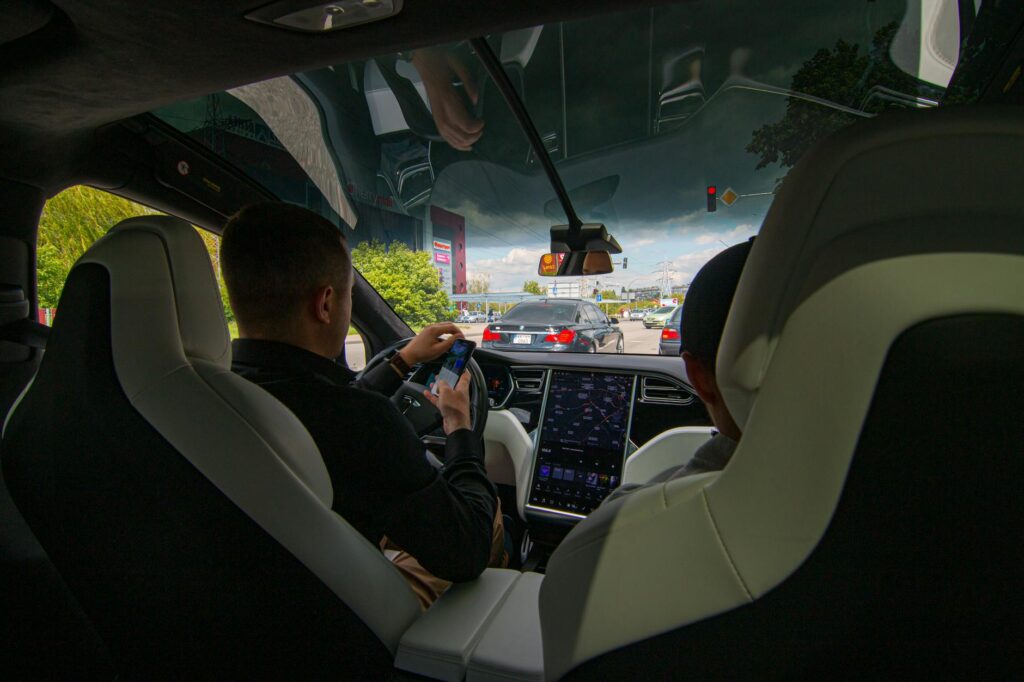
Tesla has now activated its most advanced driver assistance system in China as well.
The so-called Full Self-Driving Supervised, or FSD for short, is now available in more than a dozen markets, including North America, the Asia-Pacific region, and parts of Europe.
For the Chinese market, Tesla's second most important after the US, this step marks a strategic milestone.
Expansion into the world's toughest market
China is not only the world's largest car market but also the epicenter of the global race for autonomous driving. Local manufacturers such as BYD, Xpeng, and Huawei with its Aito partnership have invested massively in their own driver assistance systems in recent years.
Tesla had to wait a long time for approval of FSD in China. The fact that Beijing has now given the green light suggests intense negotiations behind the scenes. According to reports, Tesla has agreed to store all driving data exclusively on Chinese servers, a key point regarding Beijing's data security concerns.
What Full Self-Driving can and cannot do
The name is misleading: Full Self-Driving by no means implies fully autonomous driving. The system remains a Level 2 assistance system under international classification.
The driver must be ready to intervene at all times and keep their hands on the wheel. Tesla itself calls it 'Supervised,' meaning monitored. In practice, the software handles lane changes, turns, and navigation through complex intersections, but legal responsibility lies entirely with the human driver. In Austria and the EU, FSD is currently not available. European regulators are still reviewing the system for compliance with UN regulations on automated driving.
What does this mean for Austrian drivers?
For domestic Tesla owners, nothing changes for now. The European version of Autopilot remains limited to basic functions.
But the China launch increases pressure on EU authorities. If Tesla can prove that FSD works safely in densely populated Chinese cities, European approvals could follow.
For the Austrian automotive supply industry, a different question arises: How much longer can European manufacturers keep pace on software when Tesla and Chinese competitors are setting the pace?
Tesla's FSD expansion shows the dynamics of the global technology race. On one hand, Chinese consumers benefit from Western innovation; on the other, Tesla must comply with Beijing's strict data rules.
For Europe, the situation remains unsatisfactory: no European manufacturer has a comparable system on the market, nor is it clear when customers here will be able to enjoy the latest driver assistance technology. The lead of the US and China in autonomous driving keeps growing, while Brussels is still in the regulatory phase.
Source: TechNode | Original Article