
Beijing Sends Doctors to Ebola-Affected Area – and Secures Raw Material Interests
A five-person expert team is to combat the outbreak in the Congo. The mission falls into a region where China has invested billions in mines.
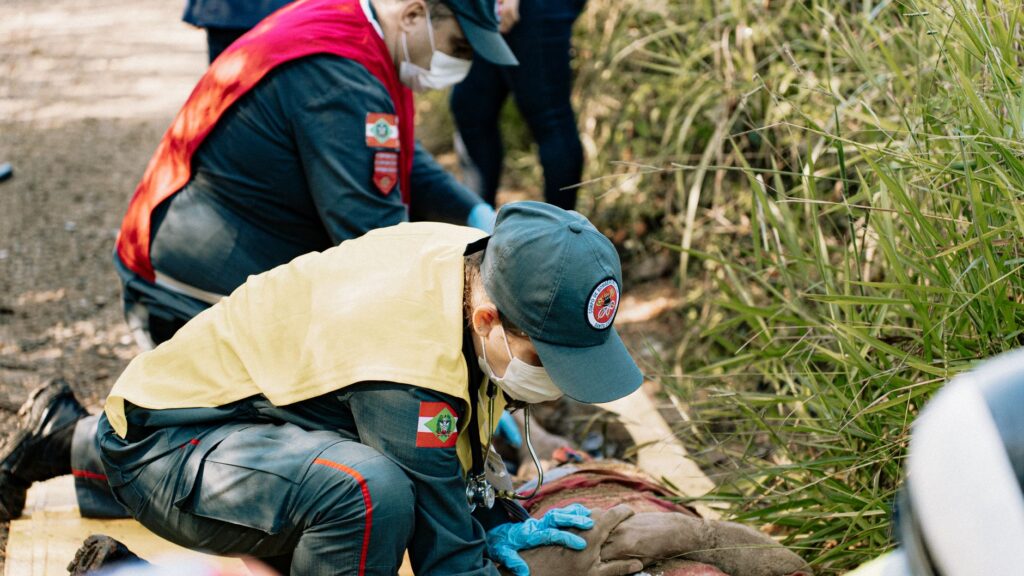
Vienna, June 7, 2026. As the World Health Organization warns of a further spread of the Ebola virus in the Democratic Republic of the Congo, China has dispatched a team of medical specialists to the Central African country. The five experts in epidemiology, clinical medicine, and traditional Chinese medicine arrived in the capital, Kinshasa, on Tuesday. Their mission: to spend three months on the front lines fighting the outbreak.
Medical aid meets strategic location
The location is no coincidence. The current Ebola outbreak is concentrated in a mining region in eastern Congo, where Chinese companies have been investing heavily for years. Cobalt, copper, and coltan—raw materials that are essential for batteries, smartphones, and electric vehicles—are mined here. According to estimates, Chinese companies control about 70 percent of Congolese cobalt production. The health of the workers and the stability of the region are therefore also in Beijing’s economic interests.
The Chinese National Health Commission emphasizes that the team will cooperate with local authorities to strengthen surveillance systems and train medical personnel. Specific budget figures for the mission were not provided.
US Withdrawal Creates Room
The phrase „filling the U.S. void“ in the original report points to a geopolitical shift. Under the Trump administration, the U.S. drastically cut its contributions to the World Health Organization and scaled back international health programs. China is positioning itself to fill this void as a reliable partner for developing countries—a strategy that Beijing has refined since the COVID-19 pandemic through the provision of vaccines and medical equipment.
For African states, this means an alternative to Western donors who often attach political conditions to their aid. Critics accuse China of using humanitarian aid as leverage for access to raw materials. Supporters argue that the motivation is secondary as long as the aid arrives.
What does that mean for Austria?
Austrian companies are part of global supply chains that depend on Congolese mining. Any instability in the region—whether caused by Ebola or political unrest—affects the prices and availability of raw materials. The domestic electronics and automotive industries feel the impact of such fluctuations directly.
At the same time, China's commitment exhibits a pattern that is also visible in Europe: Beijing is linking economic investments with diplomatic presence. In Austria, this concerns, for example, Chinese stakes in infrastructure projects or technology companies. The question of where cooperation ends and dependency begins also arises in this country.
The Two Sides of Power
China’s Ebola mission in the Congo is both humanitarian aid and a strategic effort to secure investment. The doctors will save lives—there is little doubt about that. At the same time, Beijing is consolidating its influence in a resource-rich region while Western actors are pulling back. Neither naive gratitude nor blanket criticism does justice to this complexity. The crucial question remains: Who benefits in the long term, and at what cost?
YANUS continues to observe the development.
Source: China – South China Morning Post | Original Article