
Montenegro: EU pays, China builds the Balkan highway
For the second section of the Bar-Boljare highway, Europe is taking over the financing, but a Chinese consortium is once again handling the construction. A model that points beyond Montenegro.
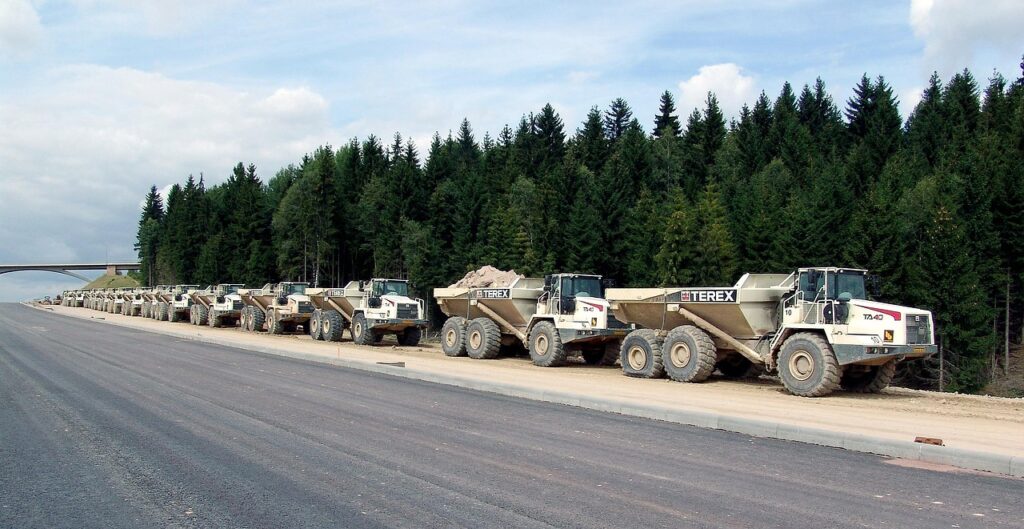
At the end of June, preliminary work began in the Montenegrin hinterland for the second section of the Bar-Boljare motorway. The project has for years been considered the most expensive infrastructure undertaking of the small Balkan state. What's new this time is the financing structure: instead of a Chinese loan, European institutions are underwriting the funds, while construction once again lies in the hands of a Chinese consortium.
From loan to contract
The first section of the Bar-Boljare motorway was built starting in 2014 by the China Road and Bridge Corporation (CRBC), financed through a loan from the China Exim Bank worth around 944 million euros. This sum contributed significantly to Montenegro's national debt temporarily rising to over 100 percent of gross domestic product. For the second section, the distribution of roles is now different: the European Bank for Reconstruction and Development (EBRD) and the European Investment Bank (EIB) are providing the bulk of the funds, while CRBC continues to be represented in the consortium as the construction company.
A pattern with recurring character
According to China Observers, similar constellations are emerging in other Balkan states as well, for example in rail and road projects in Serbia and North Macedonia, where European or international development banks are increasingly acting as financiers while Chinese construction firms retain their technical and logistical presence on the ground. The reason also lies in accumulated experience: CRBC and comparable companies have built up deep local supply chains, machinery fleets, and personnel structures in the Western Balkans over the past ten years, which can provide a cost advantage in tenders.
What this means for the region
For Montenegro itself, the new model brings a lower direct debt burden toward Beijing, since the European development banks apply different conditions and transparency requirements than bilateral Chinese loans. At the same time, the actual construction work remains technologically and in terms of personnel in Chinese hands, which extends the economic entanglement between China and the Western Balkans on a different level.
Source: chinaobservers | Original Article
For Austria and the EU as a whole, the case shows how Chinese economic engagement in Europe's neighborhood is changing: away from the classic loan model of the Belt and Road Initiative, toward a role as contractor within European-financed projects. This is changing the political debate about dependencies, because the question is no longer just who pays, but also who builds and which domestic firms remain competitive in such tenders.
Austrian construction companies that are themselves active in the Western Balkans infrastructure business are likely to follow this development with interest. Especially with regard to the major topic of reconstruction in Ukraine, this development is very interesting, since similar constellations can be expected there as well.