Cloud, AI and data: Who owns Austria's digital future?
Almost every cloud application in Austria runs on servers outside the EU. What this means specifically for the economy, security and data protection.
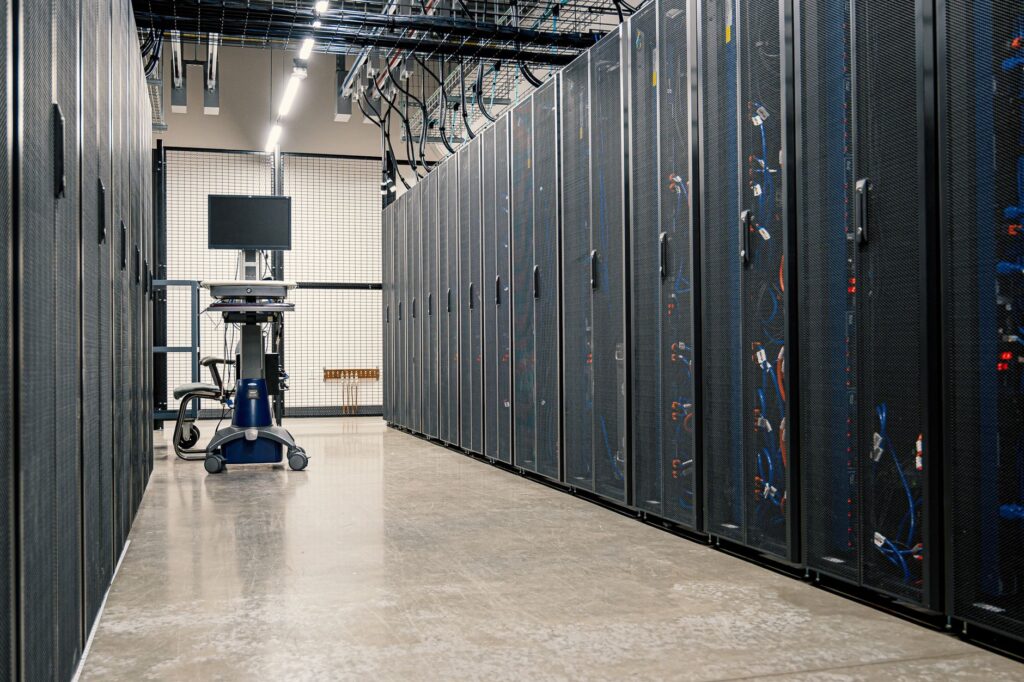
Anyone in Austria who sends an email today, saves a Word document, or uses an AI tool for work does so in most cases via servers that are not located in Europe. According to market analyses, Amazon Web Services, Microsoft Azure, and Google Cloud together control around two-thirds of the global cloud market. For Austria, a country without its own tech giant of this scale, this raises a fundamental question: How much digital sovereignty remains when the infrastructure is located abroad.
The cloud as an invisible dependency
Data centers are the backbone of the digital economy, much like power grids or highways. Austrian companies, authorities, and hospitals increasingly store data in the cloud because their own server rooms are expensive and maintenance-intensive. The problem: The three major US providers are subject to American law, such as the Cloud Act, which allows US authorities under certain circumstances to access stored data, even if the servers are physically located in Europe.
The EU is responding with projects like Gaia-X, an attempt to build a European cloud infrastructure with its own standards. Progress so far has been modest. Domestic providers like Cancom also offer cloud solutions with server locations in Austria. Compared to the billion-dollar investments of US corporations, however, these remain niche offerings.
Data centers and the energy hunger of AI
Artificial intelligence is driving the demand for data centers massively upward. According to the International Energy Agency, global electricity consumption by data centers could rise to over 1,000 terawatt-hours by 2026, which corresponds to roughly Japan's current annual energy consumption. In Austria, several hundred data centers are already in operation, most of them small and regional, for example for banks, insurance companies, or public administration.
Large AI training centers, such as those operated by US corporations or Chinese companies, do not exist here. The reason also lies in electricity costs: Austria has a high share of renewable energy in a European comparison, but network capacities for energy-intensive large projects are limited.
Whoever supplies the chips determines the pace
Behind every AI application are semiconductors, which are produced worldwide almost exclusively by a few companies. In recent years, the USA has imposed export restrictions on high-performance chips to China, while China is simultaneously investing billions in building its own chip industry.
For Europe and Austria, this means: The technological basis for AI systems lies outside its own sphere of influence. The EU has launched an investment offensive of around 43 billion euros with the European Chips Act to double Europe's share of global chip production from currently around 10 percent by 2030. Whether this goal is achievable is considered an open question among industry experts.
The question about Austria's digital future is thus not purely technical, but structural: Without its own cloud capacities, without large data centers, and without chip production, the country remains dependent on suppliers from the USA and Asia for central building blocks of the AI economy. The same pattern applies to all of Europe on a larger scale: The continent is dependent on the USA for software platforms and Asia for hardware components. Investments such as the Chips Act or Gaia-X aim to close this gap; the impact will only become apparent in the coming years when the first factories and cloud locations actually go into operation.
Source: krone.at | Original Article