
The Zhevago Case: Part 4 – Real Estate to be Foreclosed
The Supreme Court of Ukraine has made a final decision: the National Bank of Ukraine may forcibly foreclose on a real estate complex in the center of Kyiv that was pledged as collateral for refinancing loans to the bank „Finance and Credit“ owned by Konstantin Zhevago. This marks another failed attempt by Zhevago's circle to halt the proceedings.
The property: 22,000 square meters in a prime location
On May 26, 2026, the Economic Cassation Senate of the Supreme Court completed the cassation proceedings upon the application of TOV „Budivelna Kompaniya Osnova“ (Construction Company Osnova). As a result, all decisions of the lower courts, which fully favored the National Bank, remained in force.
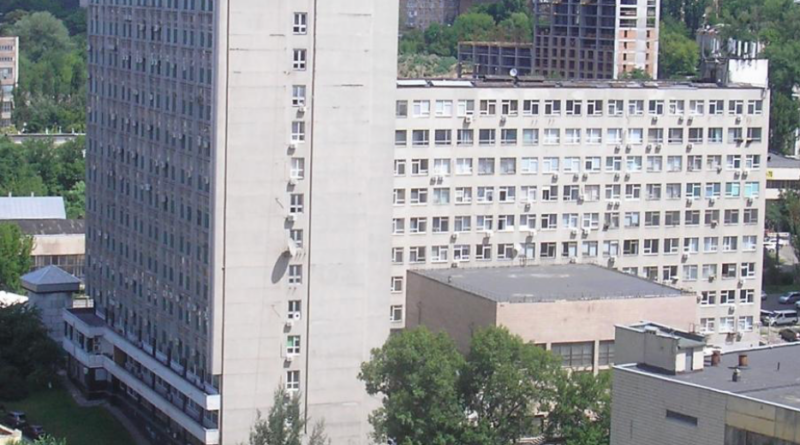
Specifically, this concerns a real estate complex with a total area of 22,621 square meters located in Kyiv, 4/6 Ivana Pavla II Street. The property was already transferred as a mortgage to the National Bank of Ukraine in 2008, serving as collateral for refinancing loans to the bank „Finansy ta Kredyt.“.
The decision timeline is clear: In July 2025, the Kyiv Economic Court fully granted the National Bank's claim. In February 2026, the Court of Appeal upheld this ruling. With the Supreme Court's decision in May 2026, the legal remedies have now been exhausted.
A decade of debt, prosecution, and flight
The bank „Finance and Credit“ belonged to Konstantin Zhevago. After it failed to meet its obligations on refinancing loans, the National Bank took legal action to seize the collateral.
Zhevago himself has been facing Ukrainian justice for years. As early as 2019, he received an initial notice of suspicion for embezzlement and money laundering in connection with around 113 million US dollars from the bank. In 2021, he was placed on an international wanted list. In December 2022, he was arrested in the French ski resort of Courchevel but was released on bail of one million euros. In November 2023, the Supreme Court of France definitively rejected his extradition to Ukraine. In July 2024, the Ukrainian Anti-Corruption Authority VAKS issued an arrest warrant for him in absentia.
In January 2023, the Deposit Guarantee Fund filed a lawsuit for 46 billion hryvnias against Zhevago to compensate for damages to the bank's creditors. In March of the same year, the Kyiv Commercial Court seized parts of Ferrexpo's holdings and a helicopter belonging to Zhevago, which had been handed over to the military.
The Supreme Court's decision is a rare signal: even oligarchs operating from abroad cannot indefinitely protect their Ukrainian assets through legal remedies if the courts have gone through the appeal process.
The Zhevago case illustrates a structural weakness in the system of oligarch accountability: criminal prosecution and civil asset recovery run in parallel but unconnected. While the property recovery in Kyiv is now legally binding, Zhevago is not in Ukraine but somewhere in Western Europe, protected by a French extradition ruling.
The Deposit Guarantee Fund's lawsuit for UAH 46 billion, criminal proceedings for embezzlement, and the sale of individual properties are mosaic pieces of a process that could still take years. The Supreme Court has closed one door. How many remain open is anyone's guess.