Asia's New Axis: South Korea and India Move Closer
While the West is preoccupied with its own affairs, two Asian heavyweights are forging an economic alliance. The $50 billion target set by Seoul and New Delhi could reshape global trade flows, with consequences for European exporters.
Vienna, April 20, 2026. Prime Minister Narendra Modi is hosting South Korean President Lee Jae Myung this week for a state visit that is far more than just a routine diplomatic engagement. Both countries have announced an ambitious goal: to increase bilateral trade volume to $50 billion by 2030. This sends a signal to the world—and serves as a wake-up call for Europe.
Strategic Partnership in Uncertain Times
The timing is no coincidence. Amidst global trade tensions, fragmented supply chains, and growing geopolitical uncertainty, both nations are looking for reliable partners outside the usual blocs. South Korea, a technological leader in semiconductors and electronics, meets India, the emerging manufacturing hub with 1.4 billion consumers.
Specifically, it concerns cooperation in the areas of semiconductors, electromobility, defense, and green energy. Samsung and Hyundai have long had a presence in India. Now, investments are to be massively expanded. President Lee brought a business delegation of over 100 company representatives to New Delhi.
What that means for Europe
For the European Union, this development is a double-edged sword. On the one hand, it shows that democratic states can form alliances even without Western leadership. On the other hand, competitive pressure is growing. Austrian and German mechanical engineers, automotive suppliers, and technology companies increasingly face Asian competitors operating on integrated value chains.
The EU has been negotiating a free trade agreement with India for years, without any breakthrough. While Brussels hesitates, others are taking action. South Korea has had a free trade agreement with the EU since 2010. Now Seoul is expanding its position in Asia, while European companies are left on the sidelines.
Geopolitics meets Economics
There is also a security dimension to the trade agreement. Both countries share concerns about a rising China. India is locked in a border dispute in the Himalayas, while South Korea is nervously watching North Korea’s nuclear arsenal and Beijing’s growing influence. Closer economic ties also create strategic dependencies—intentional ones, but this time among partners who are trusted.
For Austria, whose economy is heavily export-oriented, the question arises: How does one position oneself in a world where trade blocs are becoming more important than multilateral rules? The Austrian Federal Economic Chamber has been urging more engagement in Asia for years. The reality is different: the focus is on the EU internal market and the USA.
The Two Sides of Power
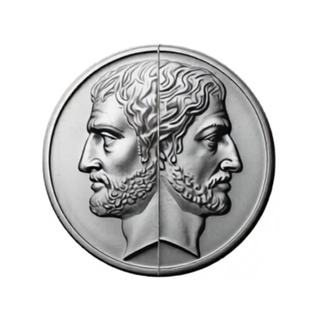
The Indo-South Korean rapprochement shows both faces of the new world order. On one hand, there's the opportunity: democracies can cooperate without American leadership, diversify trade relations, and reduce dependence on China. On the other hand, there's the danger of European marginalization. Those who wait too long will find themselves in a world with rules written by others. YANUS continues to follow this topic.