
Ukrainian Refugees Bring Enormous Benefits to Poland's Economy
Ukrainian war refugees are increasingly making a significant contribution to Poland's economic success. They are becoming increasingly integrated into the labor market, earning more, and contributing to the financing of the social and health care system. A new study shows how much the Polish economy is benefiting from this.
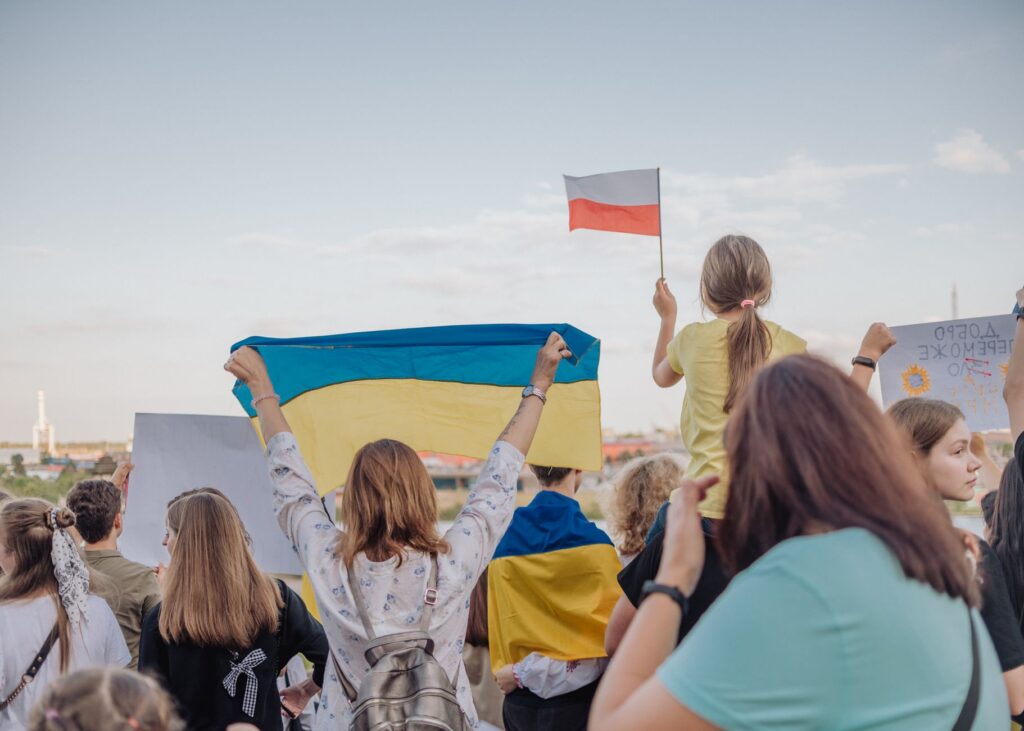
Ukrainian refugees from the war are now contributing significantly to the success of the Polish economy.
According to a study published on October 1, 2026 by the auditing firm Deloitte on behalf of the UN refugee aid organization UNHCR, Ukrainian refugees from the war contributed approximately 94 billion Polish zlotys, equivalent to about 22 billion euros, or 2.4 percent to Polish gross domestic product in 2025.
This is a macroeconomic modeling calculation that takes into account not only the direct economic performance of the refugees but also indirect effects from employment, consumption, and productivity.
The sum is therefore not equivalent to the tax payments or social security contributions of the refugees.
Background
Since the Russian war of aggression against Ukraine in February 2022, Poland has temporarily taken in the largest number of Ukrainian refugees in the European Union. Millions of people crossed the border in the first months of the war, with a considerable portion remaining permanently in the country.
Poland responded with a comparatively open labor market access that quickly enabled refugees to work legally. This decision differs from models in other EU states, where bureaucratic obstacles delayed labor market access longer.
The economic significance of the refugees is now considerable. Already for 2024, Deloitte had estimated their contribution to Polish gross domestic product at 2.7 percent. For 2025, the modeled share stands at 2.4 percent.
New Facts
Current data shows that the employment rate of Ukrainian refugees in Poland rose from 69 to 76 percent within one year. This means that around three-quarters of the surveyed refugees in this age group are now employed.
Work is by far the most important source of income for Ukrainian refugee households in Poland and accounts for approximately 87 percent of their total household income.
Income development is also remarkable: Between 2023 and 2025, the median net salary of Ukrainian refugees increased by around 45 percent according to the study. This points to increasing economic integration and improved earning opportunities.
Notable is the high educational level of refugees: 62 percent of the surveyed persons of working age hold a university degree. Nevertheless, a significant proportion work in professions that do not correspond to their existing qualification level.
Only 29 percent of the surveyed employees work in management positions, academic professions, or technical functions. Among Ukrainian employees with refugee status, 38 percent perform simple tasks, for example in logistics, gastronomy, or the cleaning industry.
The results show that Poland has indeed made considerable progress in integrating the labor market, but the professional qualifications of many refugees are not yet being fully utilized.
The healthcare system also shows a positive financing balance: Health insurance contributions from Ukrainian refugees exceeded the health services financed for them by the Polish National Health Fund in 2025 by around 50 million złoty, equivalent to approximately 11.6 million euros.
No detectable displacement of Polish employees
A particularly interesting finding of the study concerns the effects on the domestic labor market.
The study found no evidence that the increasing employment of Ukrainian refugees had worsened the employment prospects of Polish employees.
Thus, the results contradict the widespread assumption that strong immigration inevitably leads to the displacement of domestic workers.
Rather, the study suggests that the integration of Ukrainian refugees enables additional economic activities and has helped meet labor force needs. However, the absence of demonstrable displacement effects does not imply that there is no competition for jobs in individual sectors or regions.
Long-term significance for the labor market
The results show that the Ukrainian presence is increasingly evolving from a short-term humanitarian challenge to a structural factor in the Polish economy.
Many Ukrainian refugees have now found employment, have regular incomes, and participate permanently in economic life. Their integration is thus becoming increasingly important for businesses, municipalities, and public institutions.
At the same time, better utilization of existing qualifications remains an important challenge. In particular, the recognition of foreign educational credentials, language skills, and vocational training could help more refugees be employed in accordance with their qualifications.
What Austria can learn from Poland
The development in Poland is also significant for Austria and other member states of the European Union. It demonstrates what economic potential a rapid integration of refugees into the labour market can unfold.
While in Poland 76 percent of the examined Ukrainian refugees of working age are now employed, the proportion in Austria was around 50 percent according to a statement from the Federal Chancellery in February 2026. The figures are based on different survey methods and are therefore only of limited comparability. Nevertheless, they show that Austria has further potential in the labour market integration of Ukrainian displaced persons.
Particularly noteworthy is the high level of education of Ukrainian refugees in Poland. Despite a university graduation rate of 62 percent, a considerable part work in simple activities. This also raises the question for Austria of how foreign educational qualifications can be recognised more quickly and existing skills can be better utilised.
Polish experience demonstrates that successful refugee policy should not be measured only by the provision of accommodation and social benefits. What is crucial is how quickly people gain access to employment and can productively use their skills.
Poland shows that the economic integration of war refugees is not only a social and humanitarian task, but can also make a substantial contribution to growth, employment and public finances.
Cited source:
Deloitte / UNHCR: Analysis of the Impact of Refugees from Ukraine on the Economy of Poland, 3rd edition, October 2026.