
Portrait: George Williamson, Head of the Alan Turing Institute
He leads Britain's national AI institute and warns against dependence on non-European technologies. What drives his course of „national resilience“?
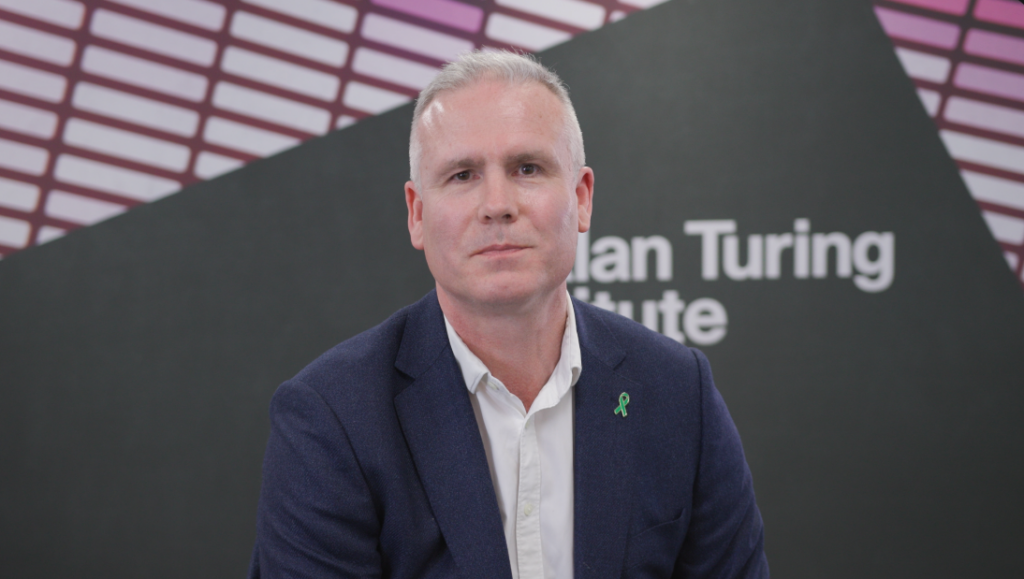
George Williamson recently took the helm of the Alan Turing Institute (ATI), Britain's national institute for artificial intelligence and data science based in London.
Founded in 2015, the institute is named after British mathematician Alan Turing and is supported by several British universities as well as the government. It is regarded as the central scientific authority for AI policy in the United Kingdom.
Professional Ascent
Williamson took over leadership of the ATI at a time when the British government is realigning its AI strategy. In recent years, the institute had repeatedly struggled with questions about its strategic direction and funding, after critics had complained about a lack of clear direction. With Williamson's appointment, the issue of „national technological sovereignty“ came more prominently to the fore of the institute's work.
In his new role, Williamson publicly positions himself on a core problem facing Western industrialized nations: growing dependence on foreign AI systems. According to his own statements to the Guardian, he sees the danger that Britain could become technologically dependent on foreign providers whose systems could potentially be shut down or restricted at short notice.
Networks & Influence
The Alan Turing Institute is closely integrated with the British higher education system; the supporting universities include, among others, University of Cambridge, University of Oxford, and Imperial College London. At the same time, the institute maintains connections to the British government, which provides part of the funding and substantially shapes AI policy.
Williamson's positioning comes at a time when the EU and individual member states are also discussing the development of their own AI capabilities, for example as part of programs to promote European computing infrastructure and so-called „Sovereign AI“ initiatives.
The ATI thus positions itself as one of several actors in Western democracies advocating for greater technological independence from the world's dominant AI providers.
Controversies
Publicly documented personal controversies surrounding George Williamson himself do not exist to the best of current knowledge. The statements on „national resilience“ quoted by The Guardian should be understood as positioning by the ATI chief, not as a government decision.
The debate over the financing and direction of the Alan Turing Institute has been the subject of British media coverage multiple times in the past, including in connection with internal criticism of the institute's strategic focus. These events occurred before Williamson took office and are therefore not personally attributable to him.
For Austria and the EU, the debate over technological sovereignty in the AI sector is immediately relevant. The EU is pursuing goals similar to the British model outlined by Williamson through initiatives such as the AI Continent Action Plan and investments in so-called „AI Gigafactories“ – building its own computing capacity and models to reduce dependence on non-European providers.
For domestic technology companies and research institutions, such as those in the environment of TU Wien or the Austrian Institute of Technology, increased European independent development could bring both new funding opportunities and changed competitive conditions.
Source: Politics | The Guardian | Original Article