
Ebola Crisis in Congo: New Therapies in a Race Against Time
In the east of the Democratic Republic of Congo, a clinical trial for experimental Ebola treatments is starting. Hundreds dead, overburdened health systems, and a question that also affects Europe.
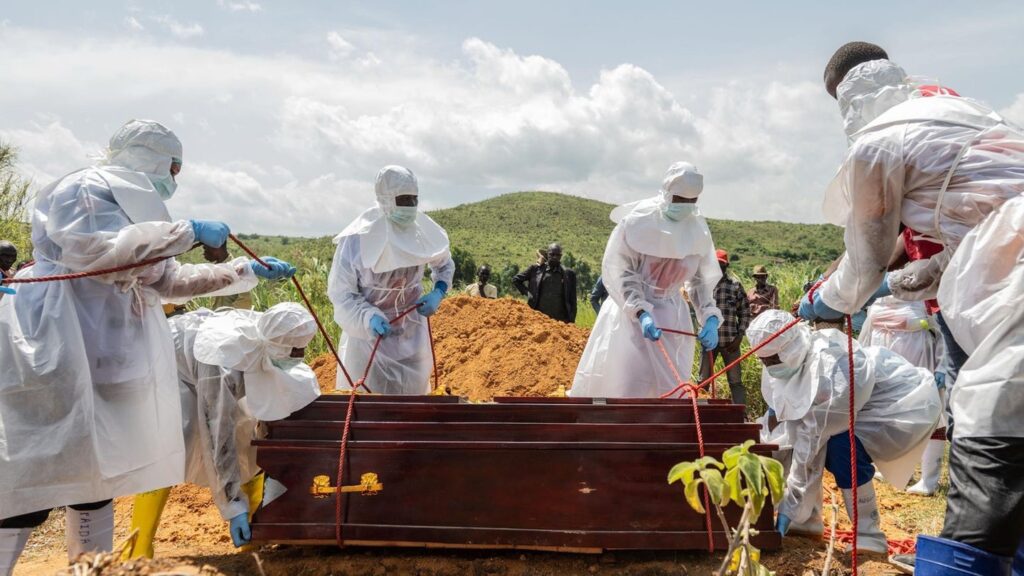
While in the eastern Congolese province of Ituri ambulances constantly bring patients to overcrowded treatment centers, researchers in the city of Bunia have launched a clinical trial that could decide matters of life and death.
Two experimental Ebola therapies are now being tested under real-world conditions, in the very epicenter of an outbreak that has already claimed hundreds of lives.

Research Under Extreme Conditions
In early July, one of the most important medical studies of the year began at the Evangelical Medical Centre in Bunia without great ceremony. The urgency left no room for formalities: The Ebola outbreak in the Democratic Republic of Congo continues to spread, case numbers are rising. The two treatment approaches being tested are intended to significantly increase the survival rate of infected individuals.
Previous Ebola outbreaks in the region, including the devastating 2018-2020 outbreak with over 2,200 deaths, have shown that without effective therapies, the mortality rate can be as high as 60 percent.
Humanitarian Crisis in Ituri Province
Ituri Province is fighting not only against the virus, but also against chronic instability. Armed conflicts make access to remote villages difficult, mistrust of health personnel hampers contact tracing. The population mourns hundreds of dead, while burial teams in protective suits must conduct safe burials, traditional mourning rituals that require body contact are among the main transmission routes.
The World Health Organization has mobilized additional resources, but local health structures are at their limit.
Austrian Perspective and Global Health Security
For Austria, the outbreak is more than a distant crisis. Domestic research institutions such as the Centre for Virology at the Medical University of Vienna have been researching hemorrhagic fevers for years.
Austrian aid organizations such as Doctors Without Borders Austria are active in the region and report dramatic conditions on the ground. Furthermore, the COVID-19 pandemic has shown how quickly regional outbreaks can take on global dimensions.
The European Union tightened its strategy for global health security in 2024, and Austria, as a member state, contributes to the financing of emergency reserves and vaccine research. The current Ebola outbreak is testing these structures under real-world conditions. The fact that the clinical trial in Bunia has begun despite all adversities is also thanks to international coordination: samples are sent to Europe for analysis, data flows in real time into global networks.
The experimental treatments are based on monoclonal antibodies, a technology that is increasingly gaining importance in the Austrian biotech scene. First results of the study are expected within weeks, and for the people in Ituri, every day counts.
Source: World – South China Morning Post | Original Article