
YMTC expands chip factories with 70 percent Chinese plant technology
While Washington cuts supply routes, the memory chip manufacturer relies on domestic machines, and overtakes Samsung in its own market. Photo: Yangtze Memory Technologies Corp. (The Korea Herald)
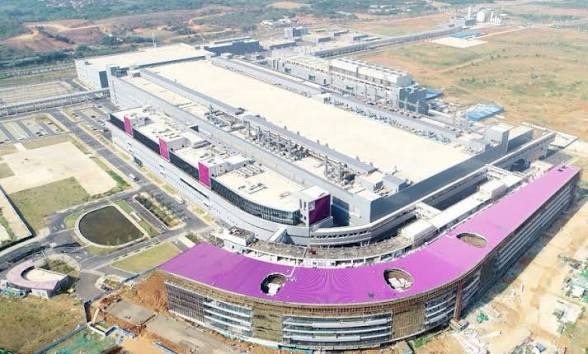
The Chinese memory chip manufacturer Yangtze Memory Technologies Corporation (YMTC) is reorienting its production.
According to a report by the news agency Reuters, the fourth factory in the Wuhan complex is to be equipped with at least 60 percent domestic equipment, with a target of 70 percent.
The third factory, whose start is expected by the end of 2026, has a domestic equipment share just over 50 percent.
Background
YMTC has been on the U.S. Department of Commerce's Entity List since December 2022. This list severely restricts the delivery of American technology to the company. At the same time, the United States also blocks the modernization of Chinese plants of Samsung and SK Hynix, which want to convert their lines to 286- and 240-layer chips.
The substitution strategy is therefore a response to the export controls. Technically demanding processes such as lithography and quality control, however, still depend on foreign manufacturers, the report says.
New Facts
The fourth factory is slated for construction in 2027 and will produce NAND memory with more than 300 vertical layers, primarily for data centers and AI systems. Official orders have not yet been awarded; preliminary talks with suppliers are underway. Chinese equipment makers Naura and AMEC are to expand their deliveries for cleaning, polishing and etching silicon wafers, processes already used at YMTC.
According to market researcher Omdia, YMTC's share of NAND shipments rose to 38.5 percent in the second quarter of 2026, up from 28 percent in 2025. In the Chinese domestic market, the company has already overtaken Samsung. The third, fourth and fifth factories are each designed for about 100,000 silicon wafers per month and are expected to more than double production capacity once fully built out.
Reactions
No official statements have been released yet from YMTC, the U.S. Commerce Department, or the affected corporations named in the report regarding the plans.
For Europe and Austria, the development is especially relevant through the supply chains: European plant and material manufacturers are internationally intertwined in semiconductor manufacturing, and memory chips for AI data centres are a central market for the industry. How the rising in‑house production impacts prices and supply outside China is currently unknown.