
Refractory Materials: China Sets New Standards with an AI Model
The world's first large-scale AI model for the refractory industry was unveiled in Wuhan. For Austria's steel and cement industries, this is more than just a footnote.
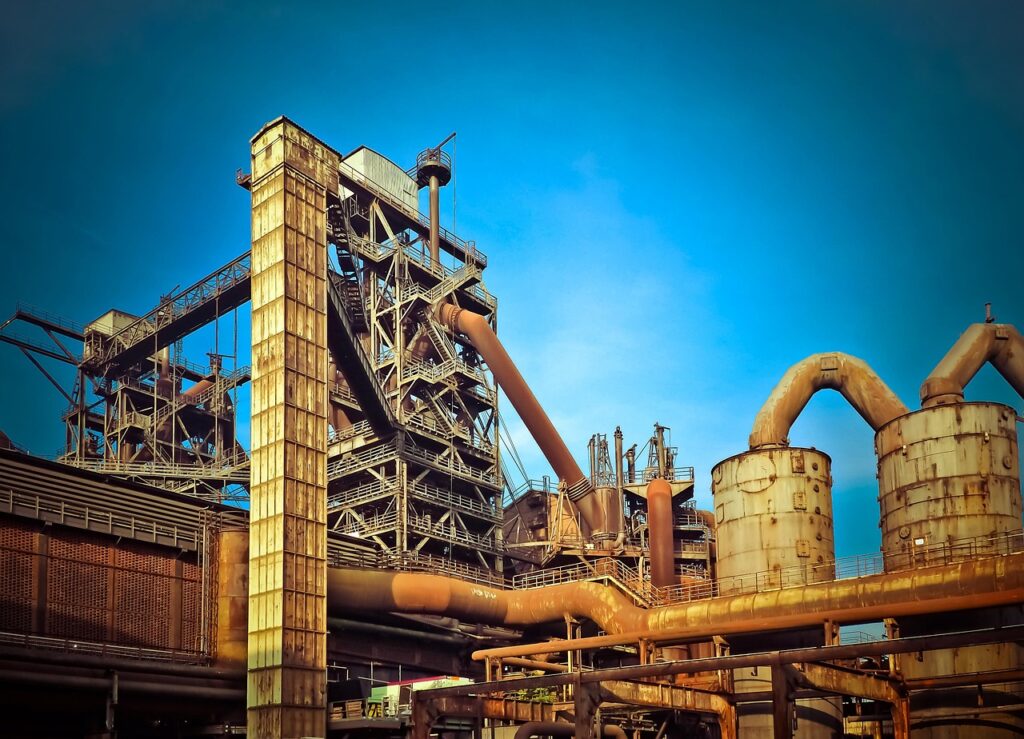
Refractory materials may sound like a niche topic, but they are the invisible foundation of the entire heavy industry. Without heat-resistant linings, no blast furnace, no cement rotary kiln, and no glass melting tank can operate.
On April 11 of this year, representatives from academia, industry, and international organizations gathered at Wuhan University of Science and Technology (WUST) in the central Chinese province of Hubei to reassess this very field, with the goal of making it greener and more digital.
An AI Model for Modern Refractory Materials and Industrial Furnaces
The highlight of the conference was the presentation of „Refractory Engineering Intelligence,“ which, according to the organizers, is the world’s first large-scale AI language model specifically designed for the refractory industry. The industry is traditionally considered to be experience-driven: material formulations and furnace linings are often based on decades of practical knowledge accumulated by individual engineers, which is difficult to systematize. An AI model that breaks through this „experience barrier“ could significantly shorten development cycles for new materials.
At the same time, a new center for digital and smart refractory materials was opened, located at the State Key Laboratory of Advanced Refractory Materials in Wuhan. Nine companies also signed agreements with the laboratory for specific research and development projects, indicating that the focus here is not merely on basic academic research, but on market-ready applications for steel mills, the cement industry, and glass production.
International Networking as a Strategy
The international lineup of the conference was particularly noteworthy. In addition to Chinese officials from Hubei and Wuhan, Philip Walls, Chair of the ISO Technical Committee on Refractory Materials, as well as former directors of the United Nations Industrial Development Organization (UNIDO) and the Asia-Pacific Engineering Organization, were in attendance. The China Science and Technology Exchange Center explicitly emphasized its role as a „bridge“ for international cooperation in areas such as green transformation and advanced materials.
This fits the pattern: Beijing is increasingly positioning technical standardization bodies and industry standards as a sphere of geopolitical influence. Those who have a say in ISO standards for materials secure long-term market access and export advantages. WUST itself points to more than six decades of research tradition in this field and thus considers itself a global benchmark, not just a regional player.
What does that mean for Austria?
Austria has, with companies such as RHI Magnesita, one of the world’s largest manufacturers of refractory products, headquartered in Vienna, has direct ties to this sector. RHI Magnesita generated revenue of approximately 3.3 billion euros in 2023 and operates in more than 30 countries, including China. Chinese advances in AI-driven materials development are therefore not just abstract news, but represent both potential competition and an opportunity for cooperation.
The domestic steel industry, such as the voestalpine, also relies on high-performance refractory materials, particularly as part of the transition to hydrogen-based steel production, which poses new thermal challenges. Faster, AI-driven material development from China could both transform supply chains and create new pressure to innovate.
The conference in Wuhan serves as a prime example of how China is strategically embracing digitalization in traditional heavy industry supply sectors to achieve technological leadership. The signing of nine industrial projects in a single day of the conference is a concrete indicator of the pace of this development.