
UBTECH Robotics: In Liuzhou robots now build robots
Every ten minutes a new humanoid robot leaves the assembly line, assembled with the help of its own kind. A look into a factory that shows where industrial manufacturing is heading. Photo: Ubtech Robotics
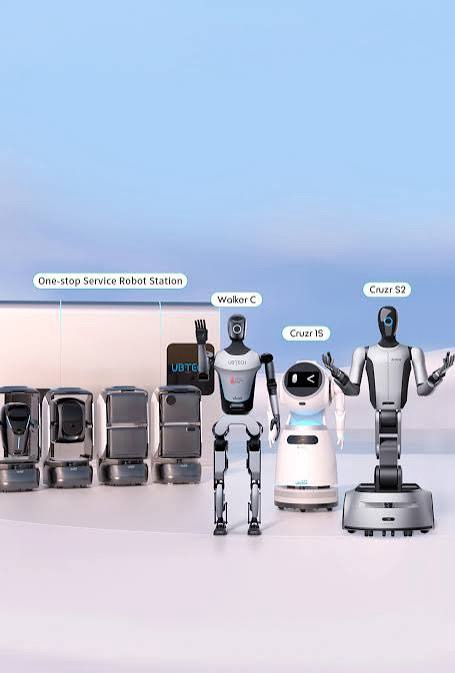
In the southern Chinese province of Guangxi, robot manufacturer UBTECH Robotics has opened a new production facility where humanoid robots are heavily involved in the manufacturing of their own successor models.
On roughly 14,000 square metres of space in the city of Liuzhou, a manufacturing system is being built that, according to the company, should produce more than 10,000 units per year. A finished robot leaves the line on average every ten minutes.
How the manufacturing actually works
In the plant, automated systems and, in some cases, the robots themselves take on tasks such as transporting components, sorting parts and handling production trays. The machines are also used for assembly steps. Each completed robot then undergoes a multi‑hour testing program before it leaves the factory.
At the heart of production are the Walker S and Cruzr model lines that UBTECH has developed for industrial use. Walker S is designed as a humanoid work robot for factory halls, while Cruzr is used, among other things, in service and reception areas. Both series target companies that want to automate repetitive or physically demanding tasks.
A principle with industrial significance
That machines are involved in the production of other machines is not new in principle: automated production lines have shaped industry for decades, from automotive manufacturing to electronics production. What is new is the scale at which humanoid robots now act as active participants in the production process rather than merely as the final product.
UBTECH is positioning itself in a growing global competitive field. Companies such as Tesla with its Optimus project or the Norwegian start‑up 1X Technologies are also working on comparable humanoid systems for industry and home use. China has declared robotics and automation a strategic focus of its industrial policy in recent years, providing state funding for research, manufacturing capacity and supply chains.
Scaling as the next step
The transition from prototypes and small series to mass production is considered one of the biggest hurdles in the robotics industry. Annual volumes in the five‑figure range, as UBTECH aims for in Liuzhou, would significantly lower the cost per unit and make humanoid robots economically attractive for more sectors. So far, many providers worldwide have failed at this jump from the factory floor in a lab scale to real series production.
Whether UBTECH will actually achieve the targeted volumes and how stable the quality remains in series production cannot currently be independently verified from the outside. Company statements on capacity and cycle times come from UBTECH's own communications.
The development is of interest to European industrial companies for several reasons. German and Austrian machine builders such as KUKA (based in Augsburg, Germany, now majority‑owned by Chinese group Midea) or the robot manufacturer ABB, headquartered in Switzerland with plants in several European countries, are increasingly competing with Chinese suppliers in the field of humanoid systems.
Lower unit costs due to Chinese mass manufacturing could affect prices for industrial robotics in the European market in the coming years, while European suppliers of sensors, actuators and control technology may find potential customers in China. UBTECH itself is listed on the Hong Kong stock exchange and has previously announced collaborations with international electronics groups such as Foxconn and automobile manufacturers.