Eastern Europe builds 18 new nuclear reactors for 185 billion euros, Westinghouse displaces Rosatom
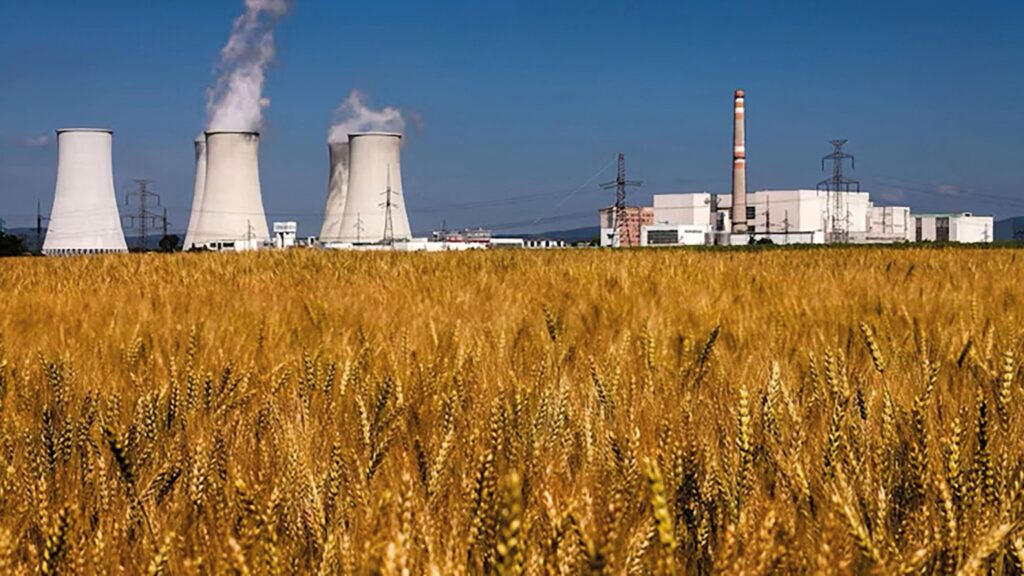
Many new nuclear power plants are being built in Eastern Europe. Slovakia is considering the construction of another nuclear power plant at the Bohunice site Photo: Source: Slovenské Elektrárne
According to a Bloomberg report, nine Eastern European countries plan to build up to 18 new nuclear reactors in the next 20 years, with costs of at least 185 billion euros. The construction is intended to accelerate the phase-out of Russian energy technologies, a move the region has been driving since Russia's attack on Ukraine.
The biggest winner is the US conglomerate Westinghouse Electric, which competes with France's EDF and South Korea's KHNP.
Background
The market for new nuclear power in Central and Eastern Europe was largely dominated by Rosatom until 2022. Several states have since re-tendered or replanned their projects. According to Bloomberg, Westinghouse is also preparing a possible stock market listing with a valuation of over 50 billion dollars.
New Facts
Poland plans up to 9 gigawatts of nuclear capacity. Westinghouse and Bechtel are building the first plant with three AP1000 blocks and 3.75 gigawatts in Lubiatowo-Kopalino (Choczewo). The state is providing 60.2 billion zloty (13.8 billion euros) for this purpose. The first block is planned for 2028, with operation expected between 2036 and 2038, representing a delay of about three years compared to the original schedule.
In the Czech Republic, KHNP received the contract to expand the Dukovany power plant with two APR1000 blocks for 407 billion crowns (approximately 18.4 billion dollars). After negotiations with Daewoo and Doosan failed, a new construction contractor is to be selected by July 2027.
Slovakia is betting on Westinghouse. The state-owned JAVYS bought 49 percent of JESS from ČEZ for 189 million euros. A six-month study on the AP1000 is underway for the Jaslovské Bohunice power plant, with project costs estimated at a minimum of 10.94 billion euros. The technology has not yet received final approval.
Bulgaria is planning two AP1000 units at the Kosloduj site, with commissioning scheduled for 2035 and 2037. Financing is being discussed with Citibank, among others.
Romania is expanding Cernavodă with two additional CANDU blocks. In the summer of 2026, two existing reactors had to be shut down due to low Danube water levels; together, they supply around 20 percent of Romania's electricity. The outage necessitated expensive electricity imports.
Hungary is reviewing the contract with Rosatom worth 12.5 billion euros for two WWER-1200 blocks at the Paks power plant. The contract was signed in 2014 without a tender process; more than 2 billion euros have already been disbursed, of which 1.1 billion euros went to Rosatom. The government under Péter Magyar is considering changing the contractor, as well as adopting American technology and small modular reactors.
Reactions
Rosatom confirmed to the media only that it has not yet received a termination notice from Budapest.
The contradiction is that Europe continues to import Russian nuclear fuel. In 2025, deliveries of Russian uranium to the EU rose by 7 percent, conversion by 9 percent and enrichment by 12 percent. The Russian shares in the European markets are therefore 16, 24 and 23 percent respectively. From January to April 2026, the import of nuclear fuel from Russia reached a value of 172.6 million euros, more than five times that of the previous year.
The expansion is driven by the phase-out of coal and Russian gas, as well as the electricity demand from AI data centers. Hindering factors include a shortage of skilled workers and equipment, rising construction costs, and years of delays. The European Commission estimates that the European nuclear industry will need an additional 180,000 to 250,000 employees by 2050.
For Austria, the development is primarily relevant in terms of electricity prices, import dependencies, and the supply chains of Austrian subcontractors, which could be involved in projects in Poland, the Czech Republic, and Hungary.